




Why your mini split has ice on it in a Wisconsin winter

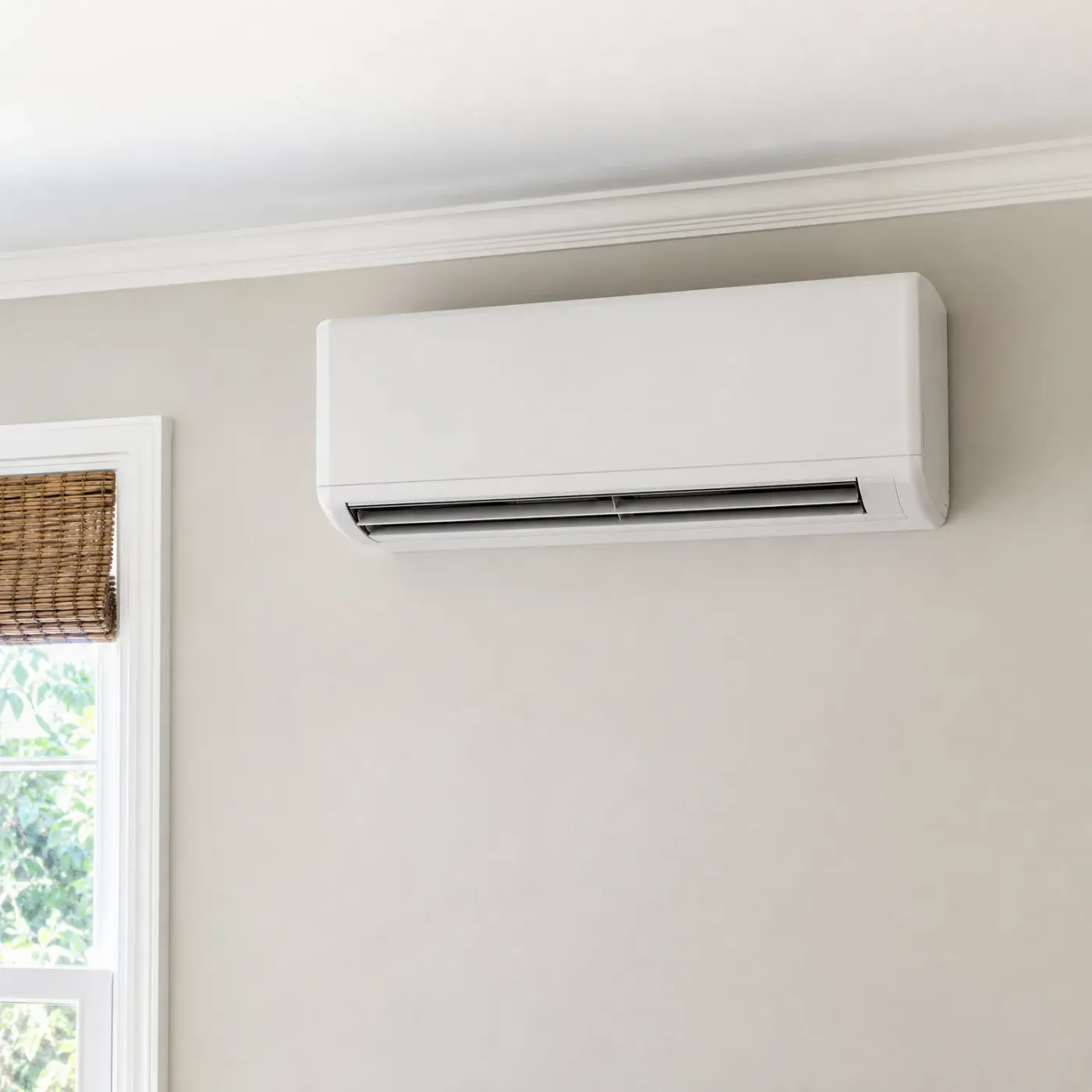
A white wall-mounted mini-split air conditioner indoor unit centered against a plain light gray background.
Hand it off

Why does my mini split have ice on it in winter?

Below zero isn't rare where you live, and when it hits, the outdoor unit can end up coated in ice while you're still waiting for warm air inside. You're not sure if that's normal for a Wisconsin winter or a sign the thing is struggling. Either way, the house still needs heat, and a frosted-up unit outside makes you wonder if it's working against the cold instead of with it.

A little frost is normal cold-weather operation, but a thick, solid coating usually means something is wrong

Every mini split builds some frost on its outdoor coil when it's cold out, because the coil runs colder than the air around it and moisture collects on it the same way it collects on a cold glass. The unit runs a defrost cycle on its own to melt that off, usually clearing it within an hour. If the ice keeps building back thicker, covers the whole unit, or never seems to clear, the defrost cycle isn't keeping up. That can mean a stuck reversing valve, a failing sensor, a low refrigerant charge, or a fan that isn't moving enough air across the coil. At single-digit temperatures, a unit already working hard to heat your home has less room to recover on its own, and a repair is what gets it back to clearing itself.

A woman in a knitted shawl sits in a living room with a fireplace, shelves, a sofa with cushions, and a lamp by a bright window, looking off to the side.
A woman with long brown wavy hair in a green shirt over a white top stands in a living room with built-in white shelves, a ceiling fan, a potted plant and a sliding glass door.
A woman with shoulder-length gray-streaked hair in a light gray knit sweater stands smiling and looking off to the side in a living room with a sofa, houseplant, framed picture, and sunlit sliding glass door.
A woman with shoulder-length curly gray hair wearing a gray knit sweater stands near a window with a sheer curtain, looking to the side, with a blurred interior room behind her.

Normal Frost or a Problem

Normal Frost

  • A thin layer on the bottom of the outdoor unit during or right after a defrost cycle clears on its own within a few minutes.
  • You still feel warm air coming from the indoor head while the outside unit has some frost on it.
  • The ice is limited to the coil fins or the base pan, not the fan blade or the refrigerant lines.
  • It shows up on the coldest nights, then disappears once temperatures climb back above freezing.
  • The unit cycles between running and a short defrost, and you can hear it switch back to heating.

A Problem

  • Ice builds up thick on the fan blade or wraps around the refrigerant lines instead of just the coil.
  • The indoor head is blowing cold or room-temperature air instead of warm air.
  • The outdoor fan is running but you don't hear the unit ever switch into a defrost cycle.
  • Ice is there even on days that stay above freezing, not just during a deep cold snap.
  • You hear the compressor running constantly without the usual on and off cycling.
  • The ice keeps coming back within an hour or two of being cleared off by hand.
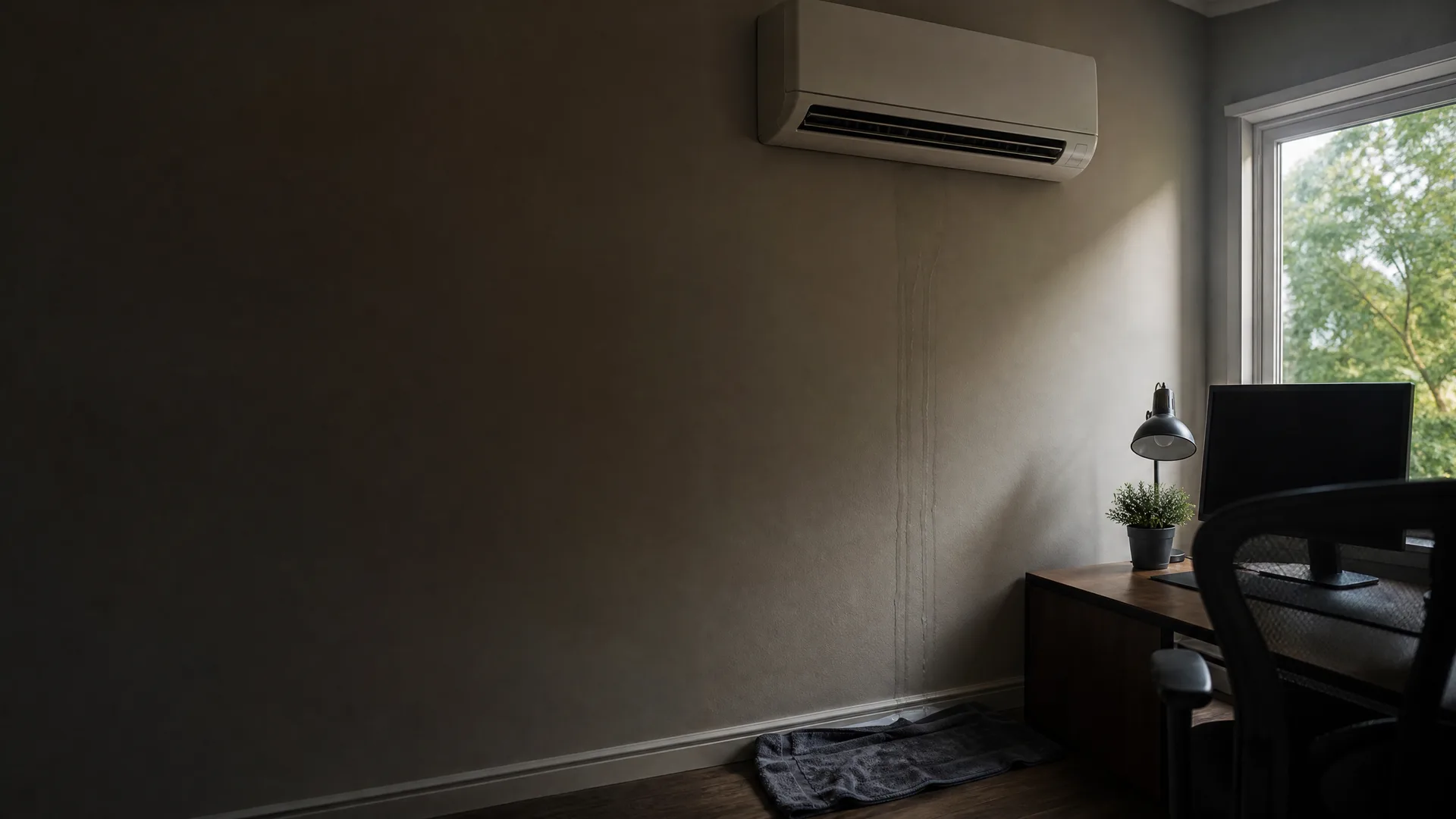
A dim room with a wall-mounted mini-split air conditioner above a faint vertical stain running down the wall, a folded grey towel on the wood floor at the baseboard, and a desk with monitor, lamp, small plant and office chair by a window.

Wrong room, wrong season for this page's image, so picture it as given: a summer afternoon, the home office quiet, the mini split indoor unit running on the wall. You notice the streak first, a dark line of water tracking down the wall under the unit, then the towel someone already put down on the floor. Outside it's been sticky for weeks, the kind of July that doesn't let up, and the unit hasn't had a break. You watch the drip start again, right on schedule, and you stop trying to work around it. You pick up your phone instead. The form takes a minute. After that, finding someone who works on these every summer isn't on your plate anymore.

Hand off the search today

The pro who reaches out is licensed in Wisconsin.

Asking costs nothing, and the choice to hire stays yours.

How the defrost cycle works

Your mini split checks its outdoor coil temperature on its own. When frost builds up enough to block airflow, the system reverses briefly, sends warm refrigerant through the outdoor coil, and melts the ice off. You might hear the outdoor fan stop and notice the indoor head blow cool air for a few minutes during this. That's normal. It's built to happen several times a day once temperatures drop near or below freezing, and it stops on its own once the coil is clear.
Why the fan matters here

The outdoor fan pulls air across the coil, and that airflow is what keeps a normal frost from turning into a solid sheet. If the fan motor is weak, the blades are bent, or something is blocking the intake, the coil can't shed heat the way it's designed to, and ice builds faster than the defrost cycle can clear it. A tech who works on these units through a Wisconsin winter checks the fan motor and the coil fins first, because that's usually where a frozen unit traces back to.

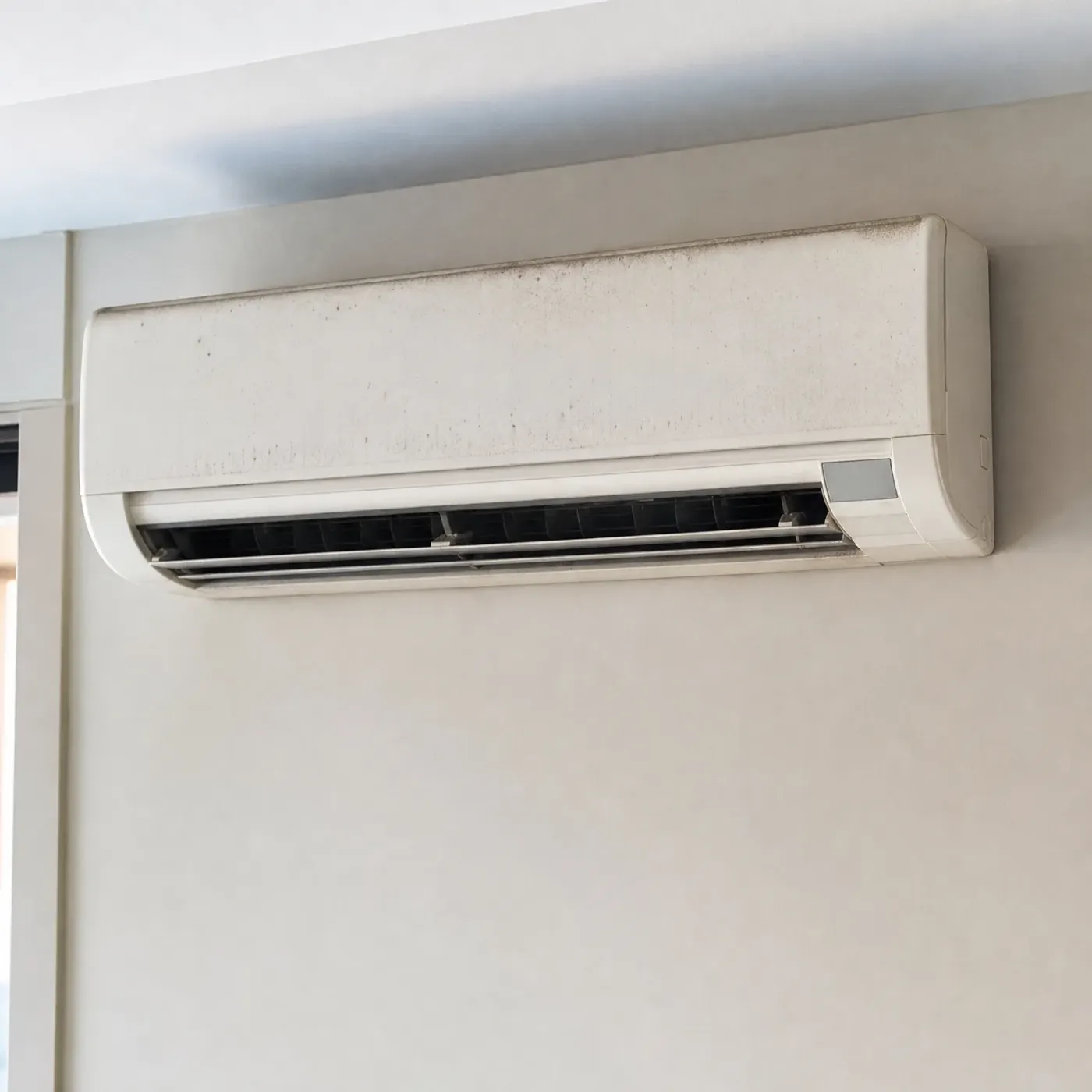
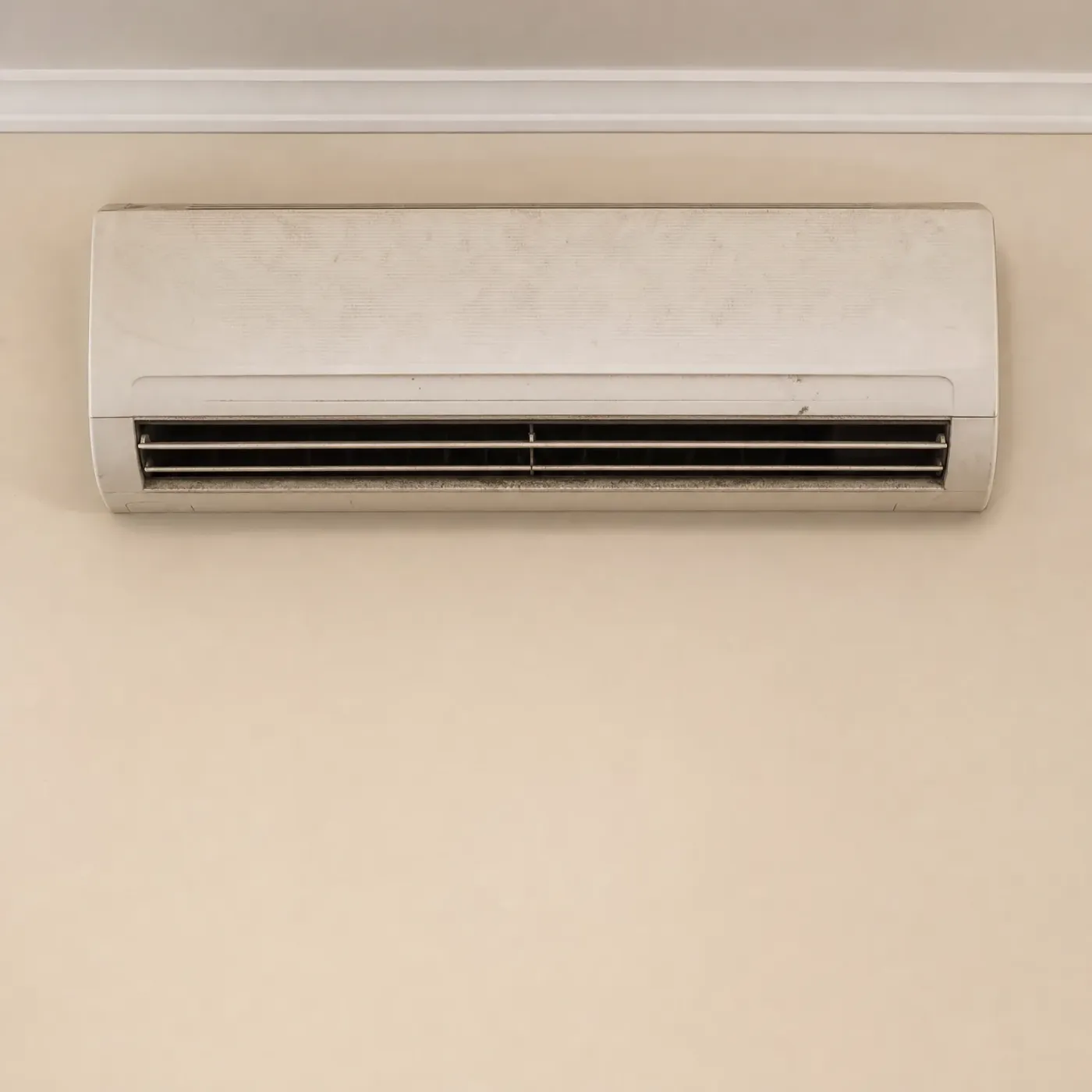
A wall-mounted mini-split air conditioner indoor unit with visible dust and staining, installed on a beige interior wall below white crown molding.
Before you get your mini split repair
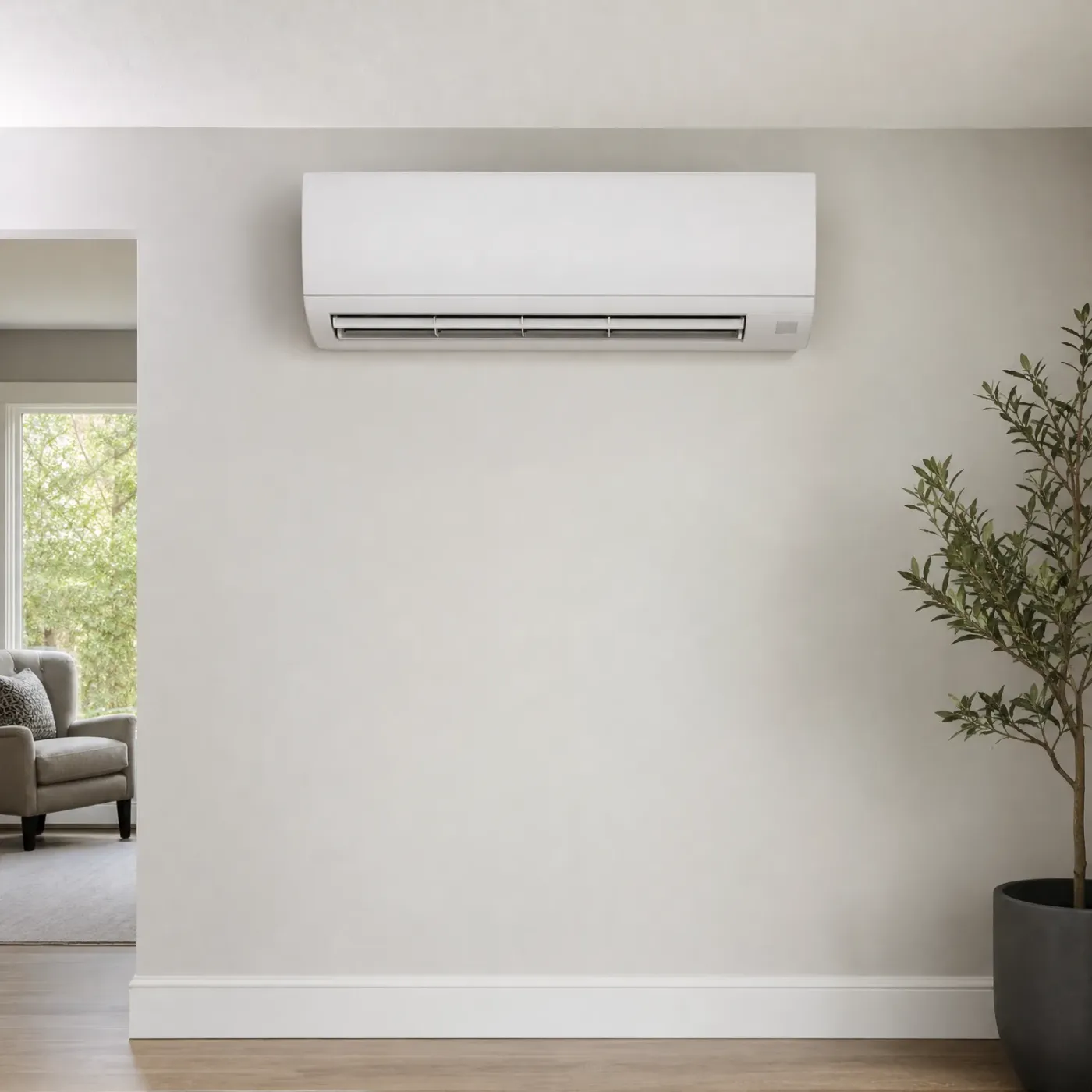
A white wall-mounted mini-split indoor unit high on a beige interior wall, with a potted olive-like tree at right and an armchair and window visible through a doorway at left.
After you get your mini split repair

Running the unit through heavy ice

A mini split with ice built up past the bottom edge is losing contact between the outdoor coil and the air moving through it. The compressor still runs, still draws power, but less heat is actually making it into your home. In a Madison or Green Bay cold snap that gap shows up fast, the indoor head blowing air that's barely warm while the system keeps working to make up for it. Left alone, a compressor that keeps running against blocked airflow is the part most likely to fail outright, and that turns a repair into a replacement.

Calling someone before it gets worse

A contractor who services mini splits through a Wisconsin winter has seen this exact ice pattern before and knows which failures cause it: a defrost sensor reading wrong, a reversing valve stuck, a refrigerant charge low enough that the coil runs colder than it should. You send one request and it goes to one licensed local contractor, not a list of companies calling you back at once. That's someone who can look at the ice itself, where it sits and how thick it is, and tell you whether this is a quick fix or something that's been building all season.

Power costs 18.08 cents per kilowatt-hour statewide

At 18.08 cents per kilowatt-hour, a mini split pushing hard against a frozen coil is burning power without heating your house. That's the compressor working against ice, not warming the rooms where your family is sitting.

EIA-861 2025 statewide residential average

A white wall-mounted mini-split air conditioner unit installed high on a beige interior wall below white crown molding, with a window and woven shade at the left edge showing green foliage outside.

Running clean

This is what the indoor head should look like all winter: quiet, pale, blowing warm air evenly into the room. Air moves freely through the fins, the coil underneath does its job, and nothing on the case hints at what the outdoor unit is doing in the cold.

A dusty, stained white wall-mounted mini-split air conditioner indoor unit installed high on a plain off-white interior wall near the ceiling.

Choked with dust

A coil like this isn't moving enough air, inside or out. Dust and grime slow the airflow the indoor head needs, and a system already working harder than it should in a Wisconsin winter has less room to handle frost on the outdoor coil before something has to give.

A little frost on the outdoor unit that clears itself after a defrost cycle is normal for a Wisconsin winter. Ice that stays, builds past the bottom edge, or shows up alongside weak or cold air inside is not, and it won't fix itself by waiting out the cold snap. Left alone, the unit keeps drawing power without putting out much heat, and that strain tends to end in a bigger repair than the one you'd have called in now. A licensed local contractor who works on mini splits all winter can look at the coil, the defrost board, and the refrigerant charge and tell you which one is behind the ice on yours. You don't have to guess whether it's serious. Send the request and let someone who knows this equipment sort out what's wrong, while you get back to keeping the house warm.

A woman and a child wrapped together in a knitted gray blanket on a couch, with the child's head resting on her shoulder and a lit table lamp and houseplant in the background.
A gray-haired woman in a cream knit sweater stands in a dimly lit kitchen at night, looking to her right, with a round loaf of bread in the foreground and a dark window and potted plant behind her.

Mini Split Repair

Stop chasing a mini split pro

Only one pro gets your request, so you hear from one company.

A black-framed smartphone standing upright against a plain white background, its screen filled with solid green.
Step 1 of 3: Equipment