Why your mini split blows cold air in Wisconsin

Step 1 of 3: Equipment

A mini split blowing cold air when it should be heating usually means it's stuck in cooling mode or the reversing valve isn't switching over. That valve redirects refrigerant flow so the unit can pull heat from outside air instead of dumping it indoors, and when it sticks, the system keeps running as an air conditioner no matter what the thermostat says. In a Wisconsin winter, that valve works harder and more often than it would somewhere milder, since the unit may be cycling between heating and defrost for months. A dirty filter or low refrigerant charge can also keep the system from building enough heat, so what feels like cold air is really just weak, lukewarm air by the time it reaches you. Either way, the unit isn't broken outright. It needs a technician to check the valve, the charge, and the controls before the next cold stretch makes it worse.

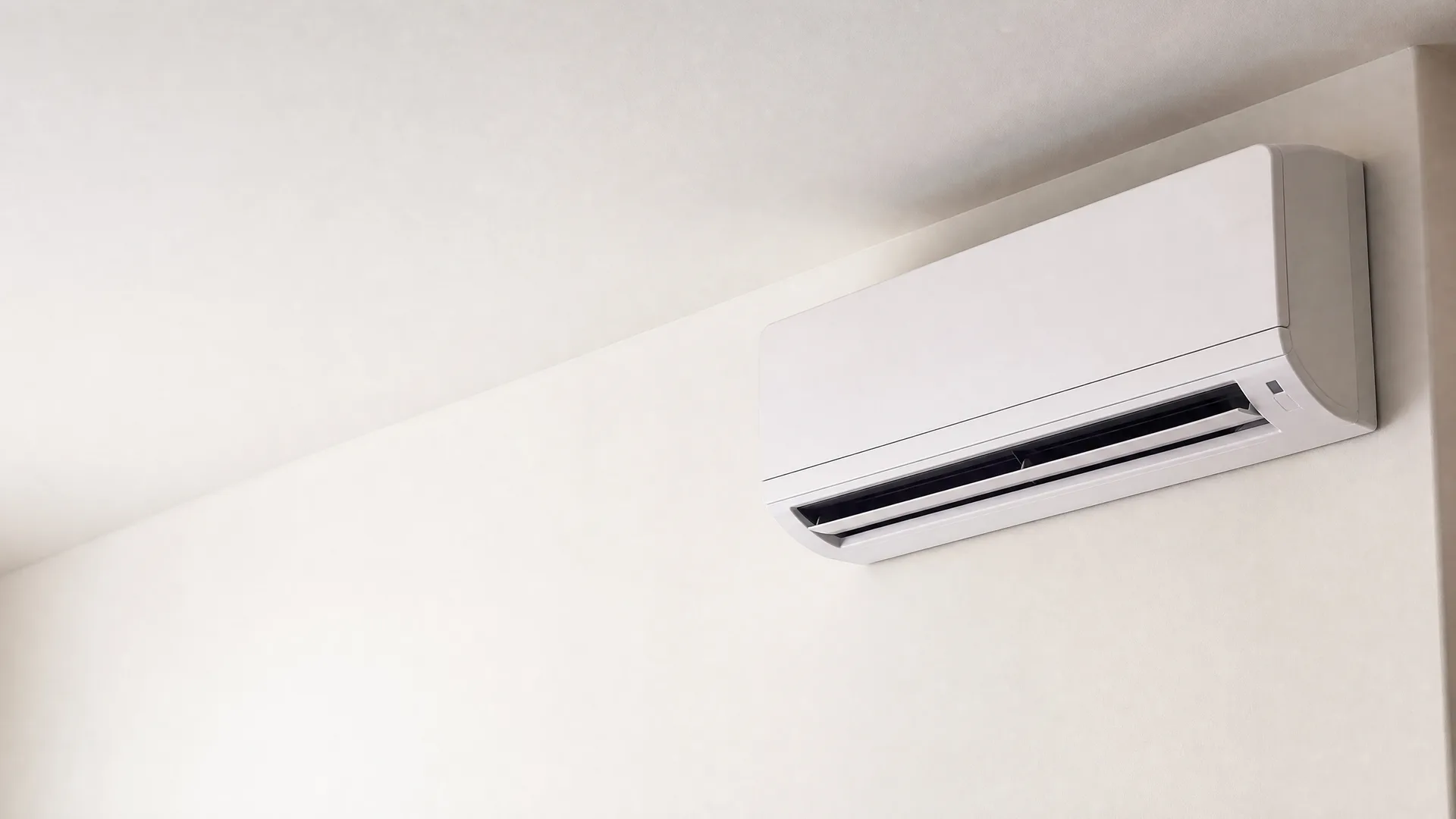
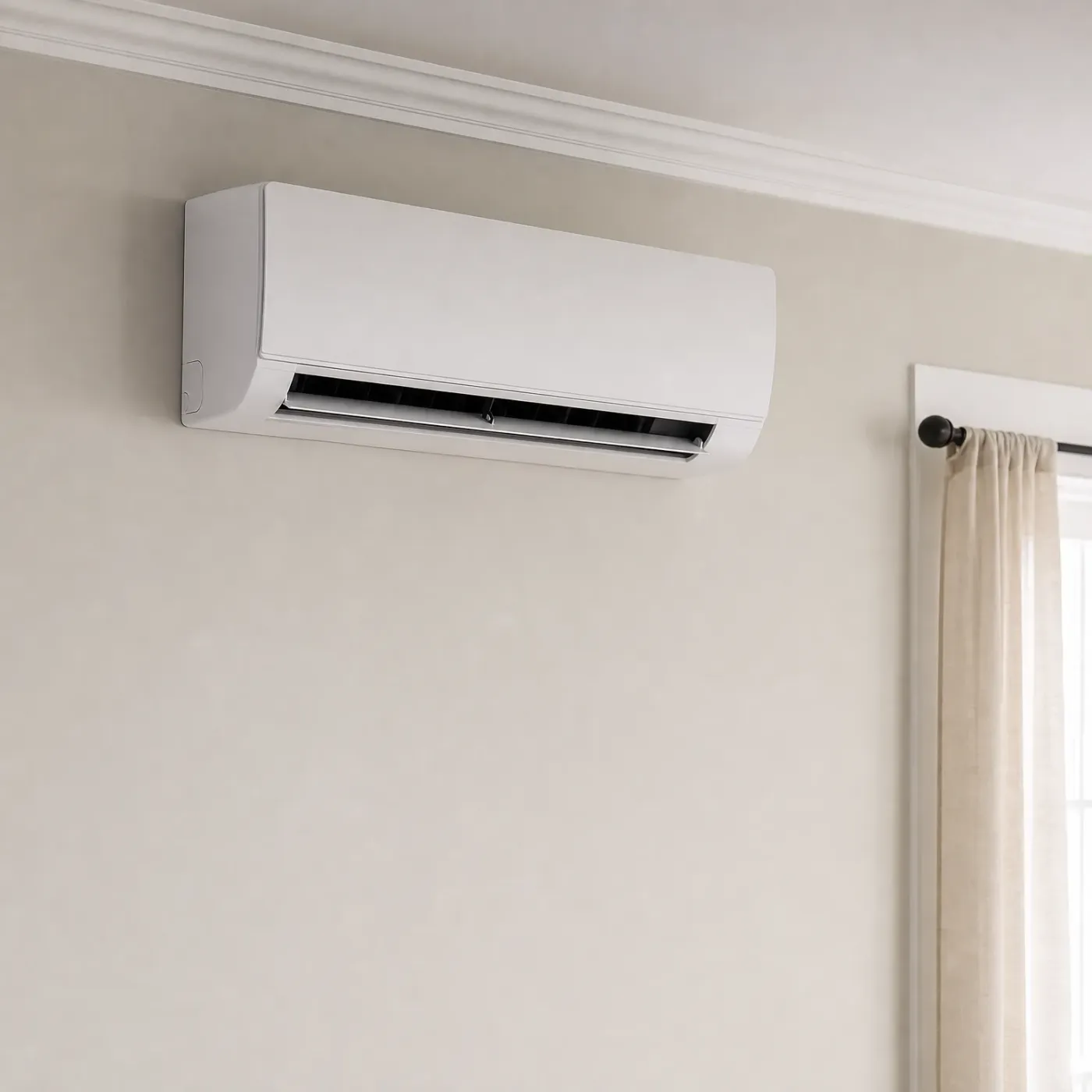
A white wall-mounted mini-split air conditioner near the ceiling of a room with plain beige walls and a pale curtain at the left edge.

The reversing valve's job

Every mini split that both heats and cools has a reversing valve near the outdoor unit. It's what tells the refrigerant which way to flow. Switch it one way and the system pulls heat from outside air and sends it indoors. Switch it the other way and it does the opposite, which is cooling. If the valve sticks in the cooling position, the indoor head keeps blowing cold air no matter what the thermostat is set to.

A white wall-mounted mini-split air conditioner indoor unit installed near the ceiling on a plain off-white interior wall.

Why Wisconsin cold makes it worse

A reversing valve that's slow or sticking is more likely to show it once outdoor temperatures drop well below freezing, which happens for months here. The valve needs enough pressure difference to shift fully, and a system low on refrigerant or with a weak solenoid coil often has just enough pressure to run on a mild fall day but not enough once a Wisconsin cold snap sets in. That's often why the problem shows up suddenly in December or January rather than in October.

Is your mini split heating the house or just running?

You'll notice it fastest at the wall unit. The fan is moving air, maybe even moving a lot of it, but what's coming out isn't warm. You hold your hand near the vent and feel room-temperature air or something cooler. The outdoor unit might be running fine, no ice buildup, no strange noise, which makes it confusing when the room still isn't warming up. Meanwhile your thermostat shows the set temperature climbing further from actual, and the unit just keeps running to chase it. Left alone through a stretch of single-digit nights, that's a room that doesn't warm up no matter how long the system runs, and a power bill that reflects all that runtime without any heat to show for it.

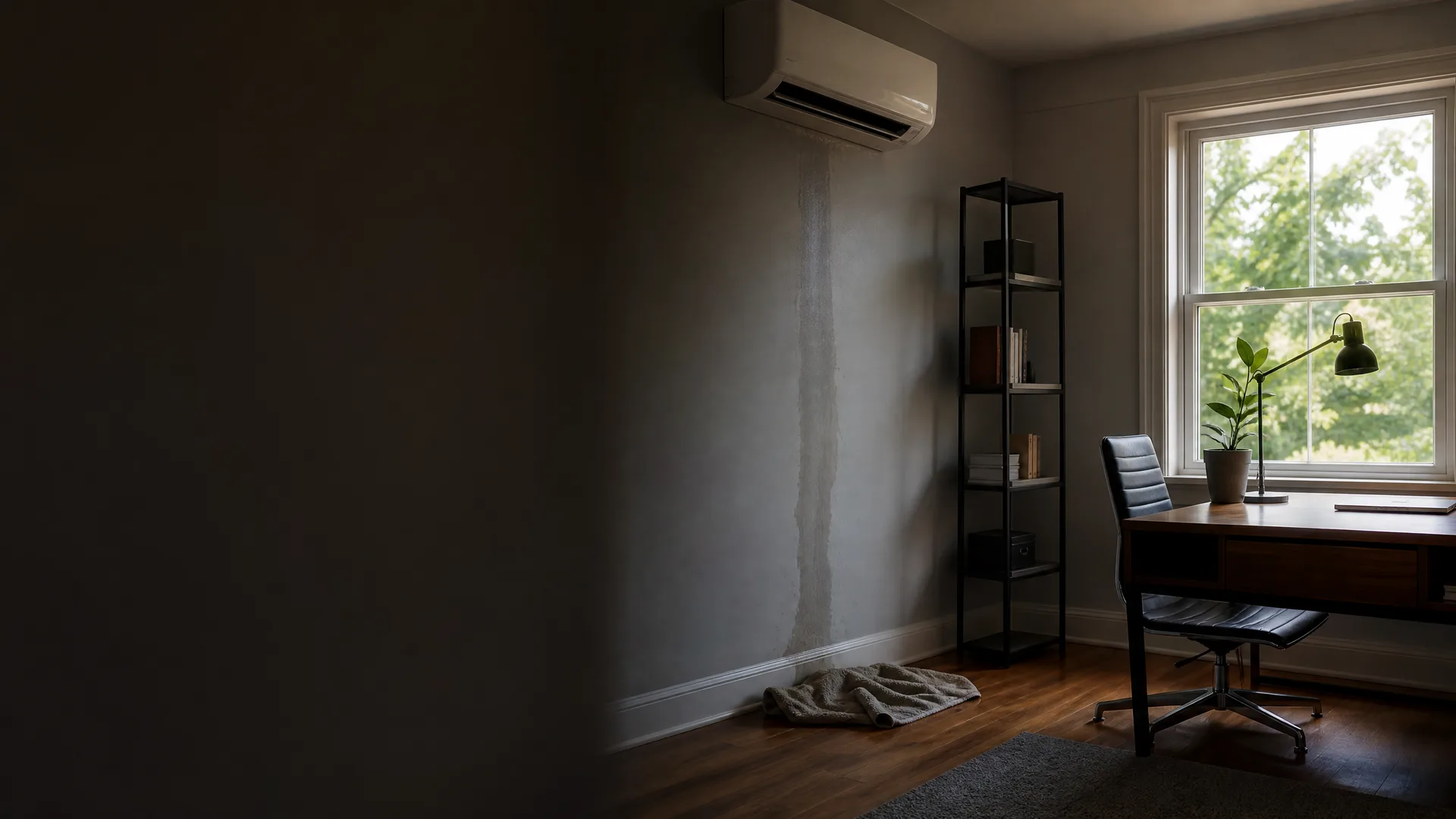
A dim room with a wall-mounted mini-split air conditioner above a water stain running down the gray wall to a towel on the wood floor, with a black shelving unit, a desk with a lamp and potted plant by a window, and an office chair at right.

You're at the desk by the window, laptop open, and you glance up when the wall behind the indoor unit catches your eye. A dark streak runs down from the housing, soaking into the drywall. By the time you cross the room it's already dripping onto the baseboard. You grab a towel from the hall closet and lay it on the floor, then stand there watching the wet line spread a little wider. The unit is still running, fan going, but the room hasn't warmed up all afternoon. Outside it's one of those gray Wisconsin days where you need the heat on, and now you've got water coming through the wall instead.
Stuck in Cooling or Just Weak Heat

Stuck in cooling

  • The outdoor unit runs but the reversing valve never shifts, so refrigerant keeps flowing the cooling direction even though the thermostat says heat.
  • You'll feel the fan pushing air that's room temperature or cooler, not warm, no matter how high the setting goes.
  • Wisconsin winters make this one obvious fast, since the house keeps losing ground to the cold outside the walls.
  • A contractor can test the valve directly and tell you whether it's a failed coil, a stuck slide, or a control board signal that never reached it.
  • Left alone, the system keeps cycling and running up the power bill without heating a single room.

Running, but not heating

  • The valve has switched over correctly, but something else is keeping the refrigerant from picking up heat from the outside air.
  • This shows up as weak warmth instead of no warmth at all, so it's easy to dismiss for a day or two.
  • A low refrigerant charge, a frozen outdoor coil, or a failing sensor can all produce this same lukewarm air.
  • Letting it ride through a Wisconsin winter means the gap between what the unit should be doing and what it's doing gets wider, not smaller.
  • A contractor working the problem early can usually pin it down before it turns into a bigger repair.
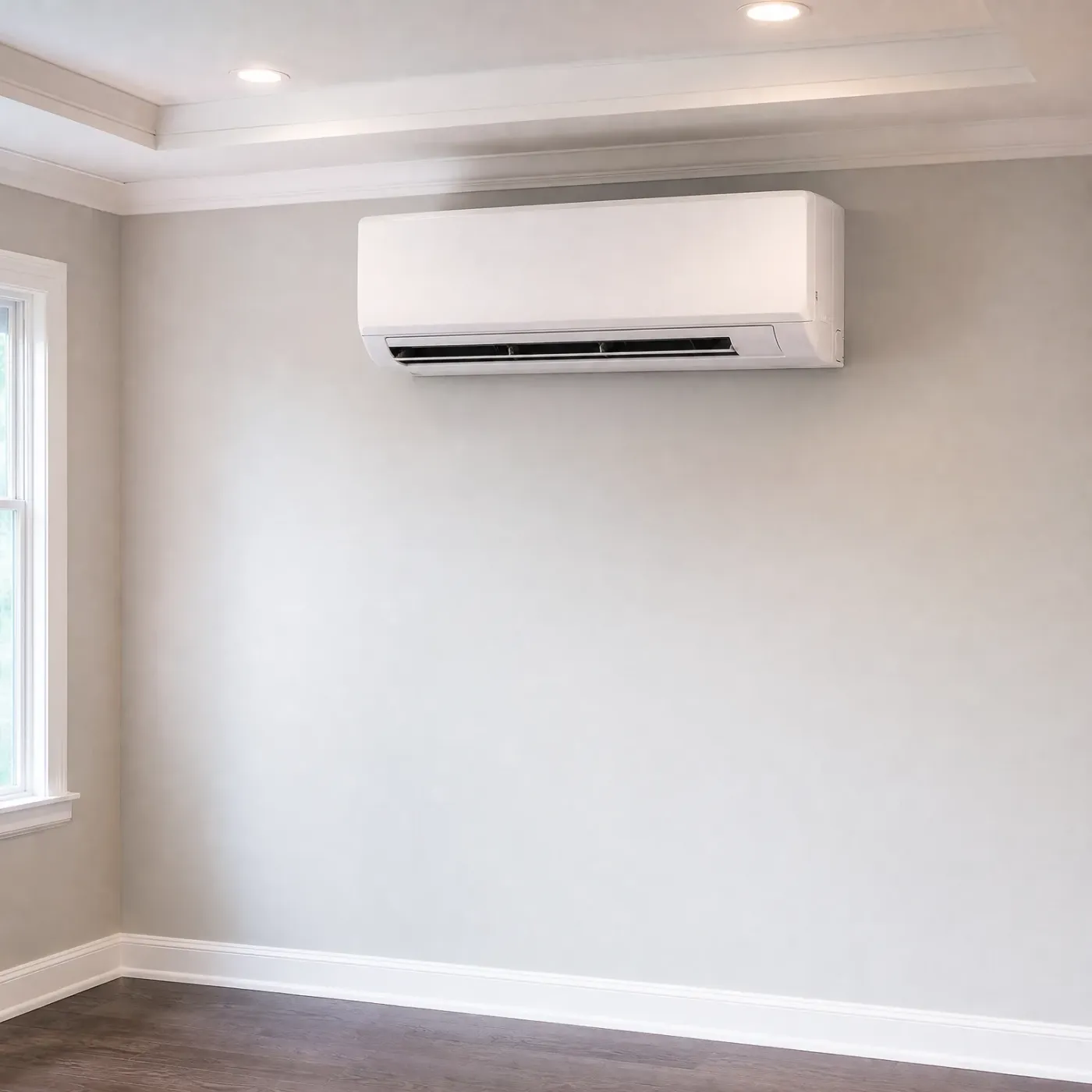
A white wall-mounted mini-split air conditioner on a light gray wall in an empty room with dark wood flooring, white baseboards, a tray ceiling with recessed lights, and a window at the left.

Running the way it should

Set to heat, this is what a working mini split looks like. Clean housing, quiet corner of the room, warm air moving steadily from the vent. No streaking on the wall below it, no frost on the outdoor unit. Nothing about it calls for a second look.

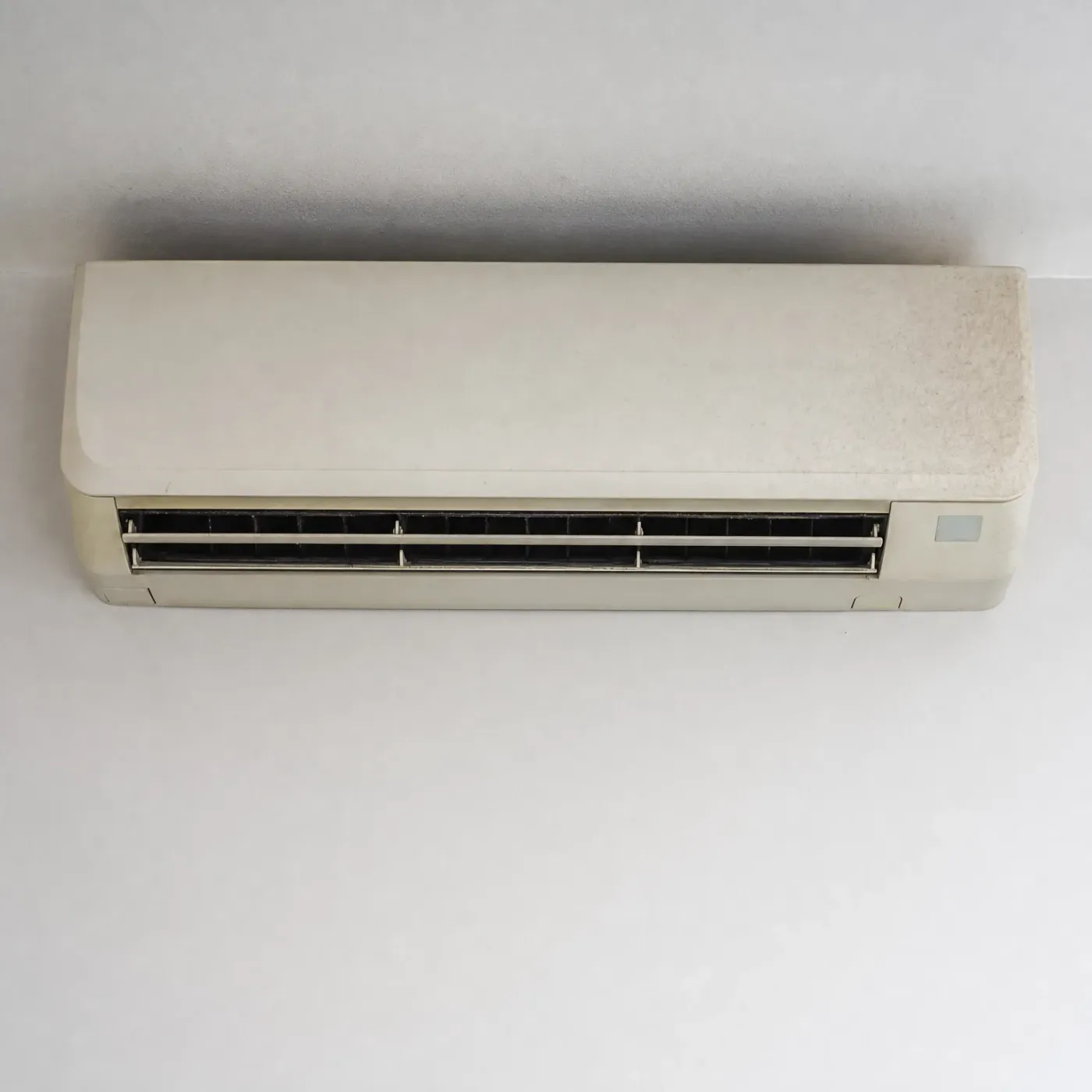
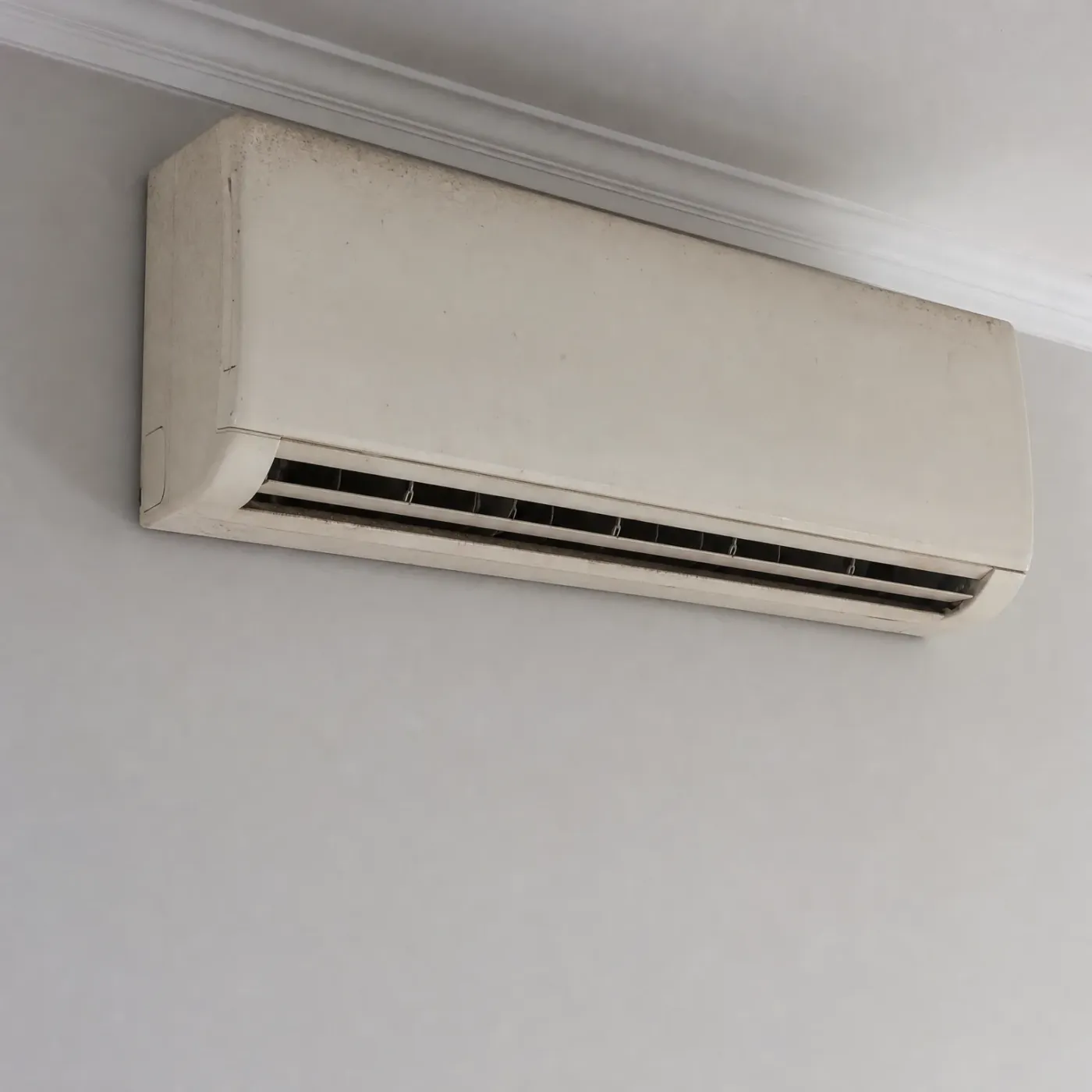
A wall-mounted mini-split air conditioner indoor unit with a yellowed plastic casing and dark horizontal vent louvers, installed on a plain light-gray wall.

Running, but not right

Dust built up across the top and dark residue ringing the vents are signs this unit has gone a long time without a filter cleaning or a service check. A mini split in this shape is more likely to stall out, trip on frost, or stick in the wrong mode.

A closed silver laptop and a ceramic mug of dark coffee sit on a wooden table in front of two chair backs, with a kitchen counter, tiled backsplash, wooden cutting boards, a vase of greenery and a potted plant by a window behind.

What the defrost cycle has to do with it

In a Wisconsin winter, the outdoor unit frosts up. That's normal. To clear it, the system briefly reverses itself into cooling mode on purpose, which warms the outdoor coil enough to melt the ice. While that's happening, the indoor unit can blow cool or room-temperature air for a few minutes. If it comes back to warm air on its own, that was just defrost working. If it doesn't switch back, the reversing valve got stuck on the cooling side of that cycle and stayed there.

A valve that sticks once will likely stick again, usually on the next cold snap, which in a Wisconsin winter isn't far off. Finding out which contractor near you actually works on mini splits, checking they're licensed, and getting someone out to look at a valve before it fails on a January night is the part that eats your evening. Send the details once and that search is off your plate.

Interior corner of a room with a window and sheer curtain at left, a gray upholstered sofa with a cushion at right, and a round wooden table holding stacked books and a round vase with an olive branch.
A man in a blue T-shirt sits on a light gray sofa, laughing while looking at an open laptop in the foreground, with a framed picture, lamp and potted plant behind him.
A bearded man in a blue and brown plaid flannel shirt stands indoors looking out a window at snow-covered trees, with a ceramic mug on the windowsill.
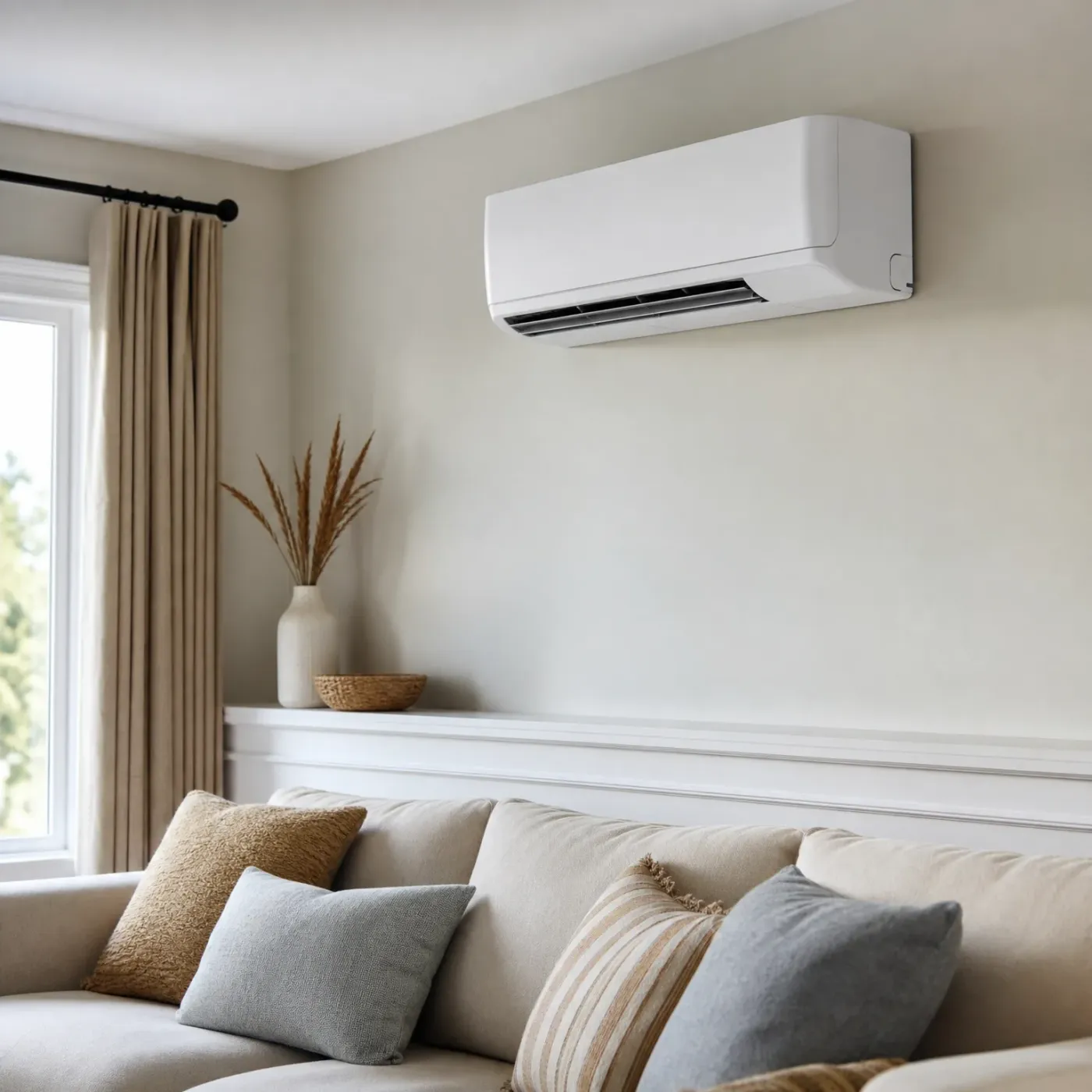
A white wall-mounted mini-split air conditioner on a pale wall above a beige sofa with assorted cushions, beside a window with long curtains and a shelf holding a vase of dried grasses and a woven bowl.

Hand off the mini split problem

Describe what your mini split is doing once, in one form.

Send the request today and let a mini split pro reach out to you.

Hand off my repair

Asking costs nothing, and the choice to hire stays yours.

Why does my mini split take so long to switch from cold to warm air?

You turned the thermostat to heat, and the vent is still pushing out air that feels cool, or at best lukewarm, minutes later. You're standing there with a hand near the unit trying to decide if this is normal or if something's wrong. In a Wisconsin January that wait matters, because the room is losing ground the whole time the air coming out isn't actually warm.

A few minutes is normal, longer than that usually isn't

When a mini split switches into heat mode, the reversing valve has to shift and the refrigerant needs time to change direction and warm up before the indoor coil has anything hot to blow across. That's usually a few minutes, not twenty. If your unit is still blowing cool air long after it should've caught up, the valve may not be fully switching, or the system could be stuck cycling through defrost without coming back out of it properly. Either way, the delay is the system telling you something, not just cold Wisconsin air working its way through the line. A tech can check whether the valve is shifting fully or hanging partway between positions.

A two-story house with gray and light gray siding, white-trimmed windows and a white front door, flanked by deciduous trees, with a partly browned lawn in front under a clear blue sky.

That defrost cycle issue matters more here than the number alone suggests. Wisconsin summers don't just feel sticky, they average a 60°F dew point across June, July and August, according to NOAA climate records for the state. That's heavy air, the kind that makes your mini split's indoor coil collect moisture fast when it's cooling. Come winter, if the reversing valve is slow or sticking, the same system that handled that humid air all summer is the one struggling to shift over. A unit that already works hard against sticky air in July has less margin for a valve that hesitates in January. If your mini split is blowing cold when it should be heating, that summer workload is part of the story.

NASA POWER T2MDEW county cells weighted by homes

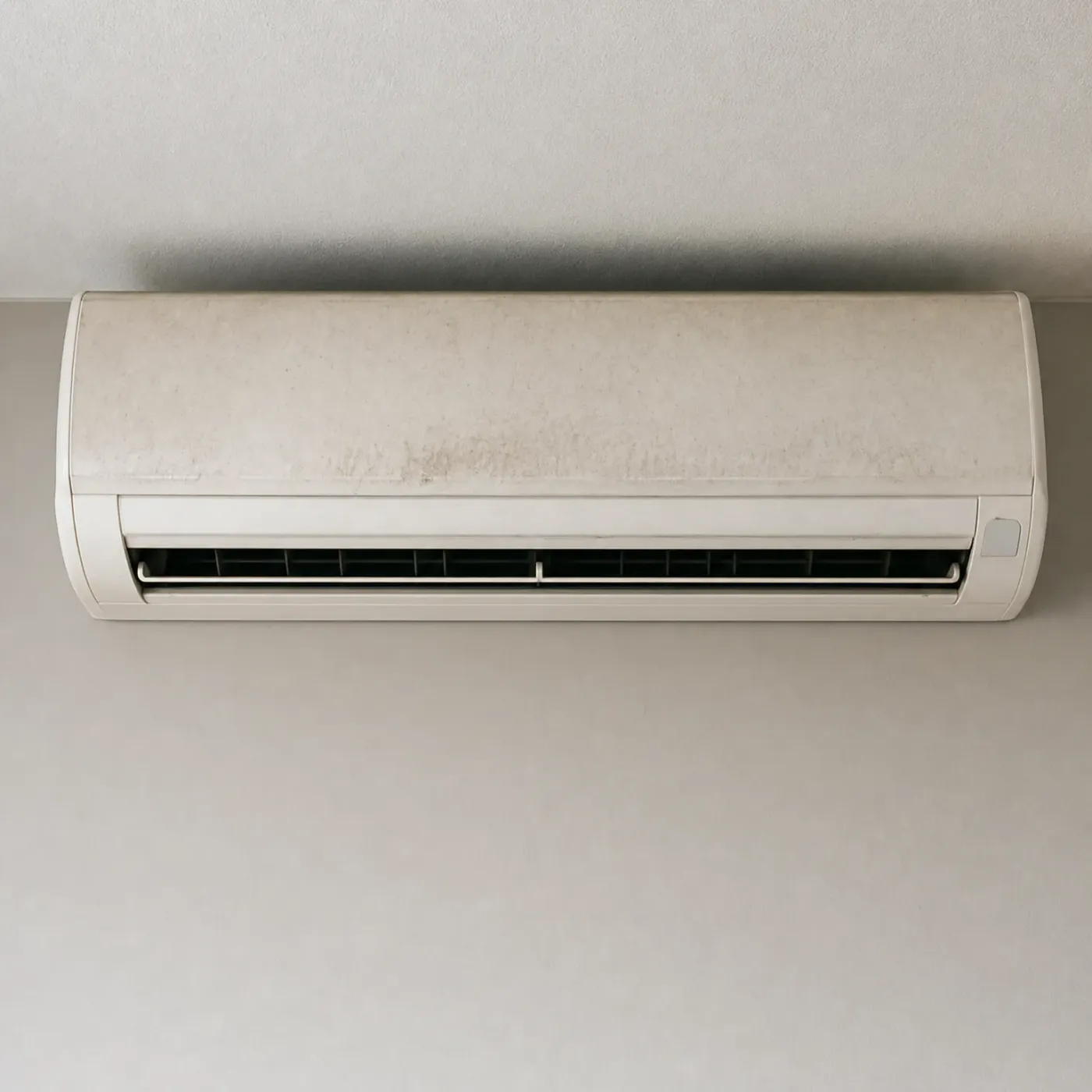
A wall-mounted mini-split air conditioner indoor unit with a dusty, discolored cover, installed near the ceiling on a plain light-colored wall.
Before you get your mini split repair
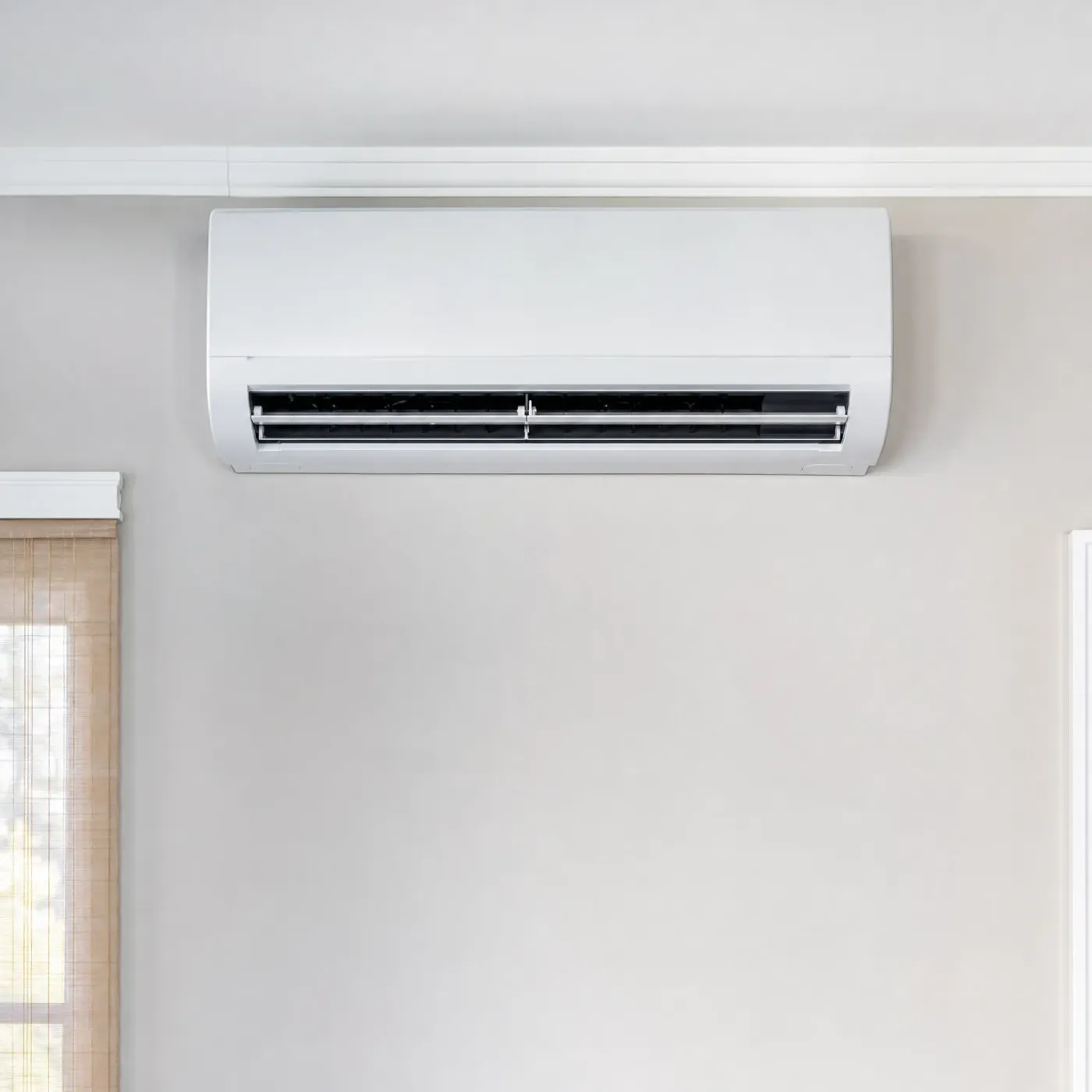
A white wall-mounted mini-split air conditioner unit installed high on a light gray interior wall below crown molding, with a bamboo-shaded window at the lower left.
After you get your mini split repair

Power costs 18.08 cents per kilowatt-hour statewide

A reversing valve that's stuck or a system cycling into defrost over and over doesn't just leave you cold, it runs the outdoor unit harder trying to catch up. At 18.08 cents per kilowatt-hour, that's not a cost you want to carry through a Wisconsin winter waiting it out.

EIA-861 2025 statewide residential average

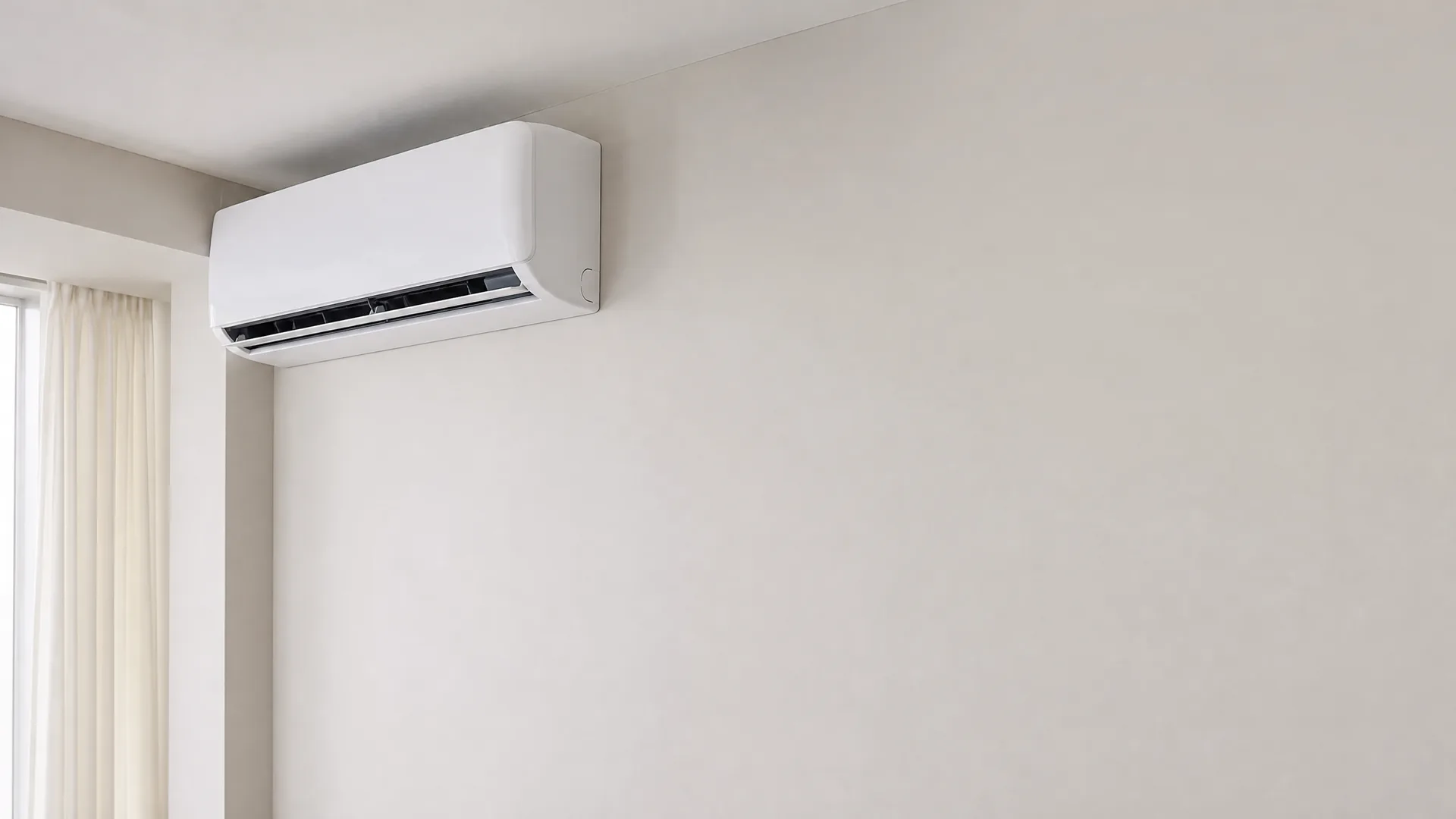
A white wall-mounted mini-split air conditioner installed high on a beige interior wall below crown molding, with a window and light curtain on a black rod at right.
Set to heat and doing its job, with warm air moving out and nothing on the wall or coil to question.
A wall-mounted mini-split air conditioner indoor unit with a dusty off-white casing and dark lower vent, installed high on a plain light-colored wall below a ceiling molding.
A dusty, discolored housing like this is worth a look before it turns into a stuck valve or a streaked wall.

Cold air, warm air, and what decides it

  • Cold air from a mini split set to heat points to a reversing valve that isn't shifting or a system stuck in cooling mode.
  • A unit cycling into defrost over and over will blow cool air in bursts, which is different from a valve that's failed outright.
  • A streaked wall or frosted outdoor coil are signs worth catching before the valve itself gives out.
  • Wisconsin winters put real strain on the defrost cycle, and a struggling system runs the outdoor unit harder to keep up.
  • At 18.08 cents per kilowatt-hour, that extra runtime shows up on the bill fast.
  • Telling heat-mode cooling apart from a normal defrost cycle decides whether this is a quick check or a valve replacement.

Set the thermostat to heat and feel cold air anyway, and the cause is almost always one of two things. Either the reversing valve isn't shifting the refrigerant the way it should, or the system is doing exactly what it's supposed to do during a defrost cycle and you're catching it mid-cycle. Those look similar standing at the vent, but they're not the same problem. One clears itself in a few minutes. The other doesn't clear itself at all, and running the thermostat up and down won't change that.

The outdoor unit is where this gets decided. Frost on the coil during a cold snap is normal, and so is a short burst of cool air while the system reverses itself to melt that frost. What's not normal is a unit that seems to be defrosting constantly, or one that never warms back up once the frost clears. A streaked wall under the indoor unit or a coil that stays iced over longer than it should are both worth a look now, before the valve itself fails.

Left alone, a struggling system doesn't just leave rooms cold. It runs the outdoor unit longer trying to catch up, and at 18.08 cents per kilowatt-hour, that extra runtime adds up over a Wisconsin winter. Whether this is a valve that needs replacing or a defrost cycle that's running longer than it should isn't something you can tell for certain from the couch. It takes someone checking the refrigerant flow at the valve itself.

A smiling man in a gray long-sleeved shirt stands in a kitchen looking to the side, with open shelves of dishes, a white mug on the counter, a potted plant, and a view through a doorway into a living room.
A smiling bearded man in a green sweater sits at a white marble kitchen island with a mug, potted plant and bowl of fruit, in a bright white interior with open shelving and an arched doorway.
A smiling man with dark curly hair and a beard, wearing a dark green knit sweater, stands at a white marble kitchen counter with a dark blue mug, with open shelving, pendant lights and a houseplant behind him.
A smiling man in a green ribbed sweater stands behind a wooden table holding a ceramic mug of coffee in a kitchen with white subway tile, shelves of potted plants, and a bowl of fruit.

It's off your list after this

A mini split blowing cold air in the middle of a Wisconsin winter isn't something to wait out. It usually comes down to a reversing valve that won't shift or a defrost cycle running longer than it should, and either one can leave the outdoor unit working harder on electricity that already costs 18.08 cents per kilowatt-hour. Send the form and skip the part where you're searching for a contractor, calling around, and explaining the problem over and over. Get matched, and let someone qualified sort out what's actually wrong.

Send it today

Answer a few questions instead of calling shop after shop.

No fee to send it, and nothing to sign.