A local pro who knows mini splits gets your details and gets in touch.
A mini split tune-up is a cleaning and inspection visit, not a repair call. A contractor opens the indoor head, pulls the filters, and checks the coil for the dust and mold film that build up over a Wisconsin summer of steady cooling. The outdoor unit gets checked too, since leaves and yard debris sit against the coil fins all season and choke airflow without you seeing it happen.
Part of the visit covers the refrigerant line and the drain. A low charge makes the system run longer to do the same job, and with power costing what it does here, that shows up on your bill before it shows up as a comfort problem. The condensate drain gets checked so it isn't dripping into your wall or shutting the unit down on its own safety switch.
A tune-up also covers what the system does for you in winter, if yours is set up to heat. Mini splits that run during a Wisconsin January are pulling double duty next to a gas furnace, and a tech checks the defrost cycle and the electrical connections that take the load during that work.
What happens after you ask is simple. You get matched with one contractor, someone local who works on mini splits in this climate all year and already knows what tends to fail on them here, the dirty coil, the clogged drain, the wiring that loosens with heat cycling. That contractor reaches out to you directly. No field of calls from five different companies, no guessing which one actually services your system. Just the one who does.
From there, the specifics of your unit, its age, how it's set up, what it's done this year, are between you and that contractor. The button below starts that match.
What does a mini split tune-up actually include?
You've got a mini split and you want to know what you're actually paying for before you book a tune-up. The term gets used loosely, so it helps to know what a contractor actually does during the visit versus what gets left alone unless something's wrong.
It's a cleaning and inspection, inside and out, not a repair
A contractor works through both halves of the system on one visit. Inside, that means the filters, the coil, and the blower wheel, since that's where mold and dust collect after a summer of steady cooling. Outside, the condenser coil gets cleared of grass clippings, cottonwood fluff, and whatever else has settled into the fins since spring. The refrigerant lines and electrical connections get checked, and the drain line gets cleared so condensate isn't backing up into the house. None of this fixes a broken part. It's meant to catch the wear that makes a unit run harder and cost more to operate, especially with power rates what they are in Wisconsin, before that wear turns into a breakdown.
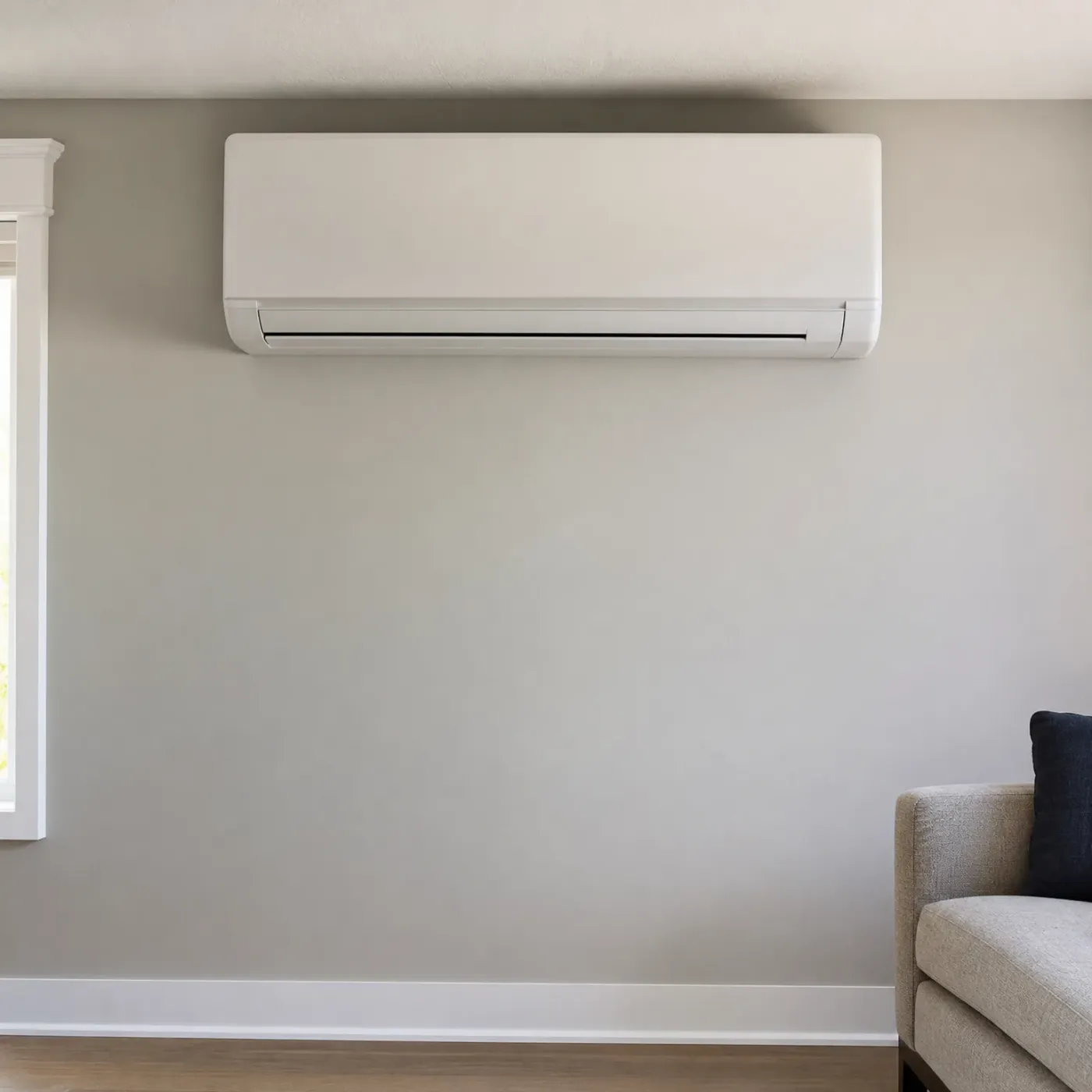
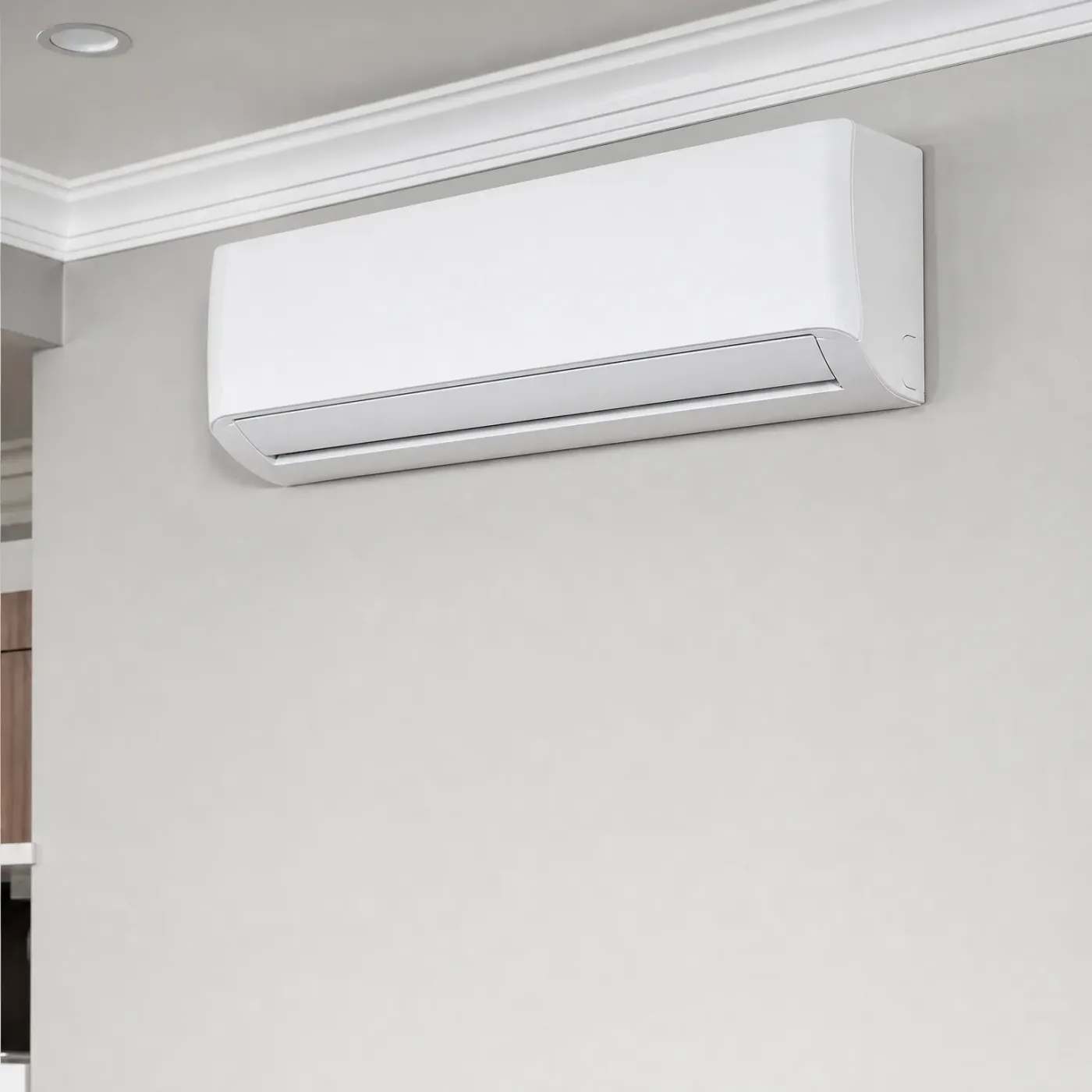
Running clean
A mini split that's been serviced puts out even, cold air with no smell when it kicks on. The filters are clear, so the head isn't straining to push air through a layer of dust. In a Wisconsin summer, that's the difference between a room that cools fast and one that runs all afternoon.
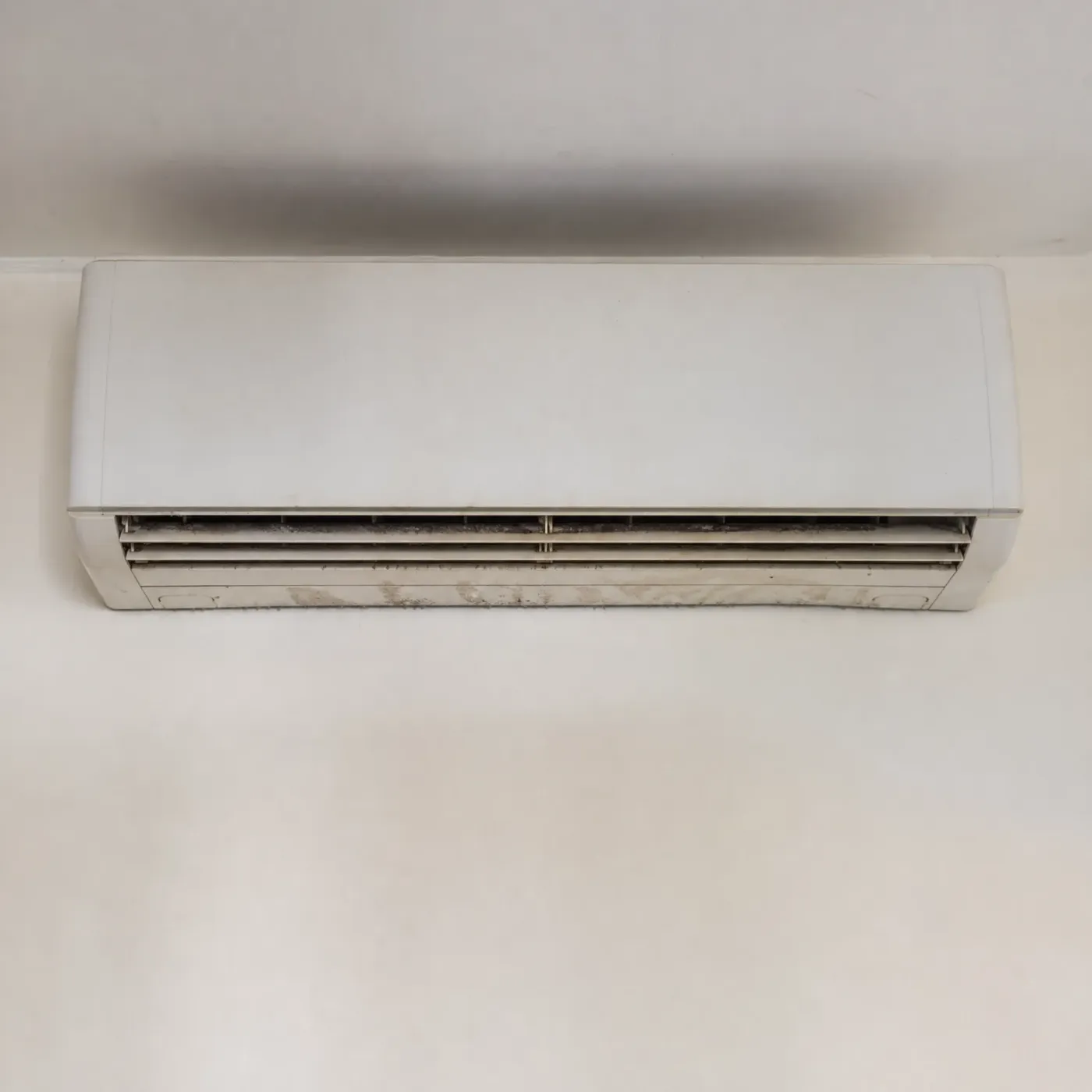
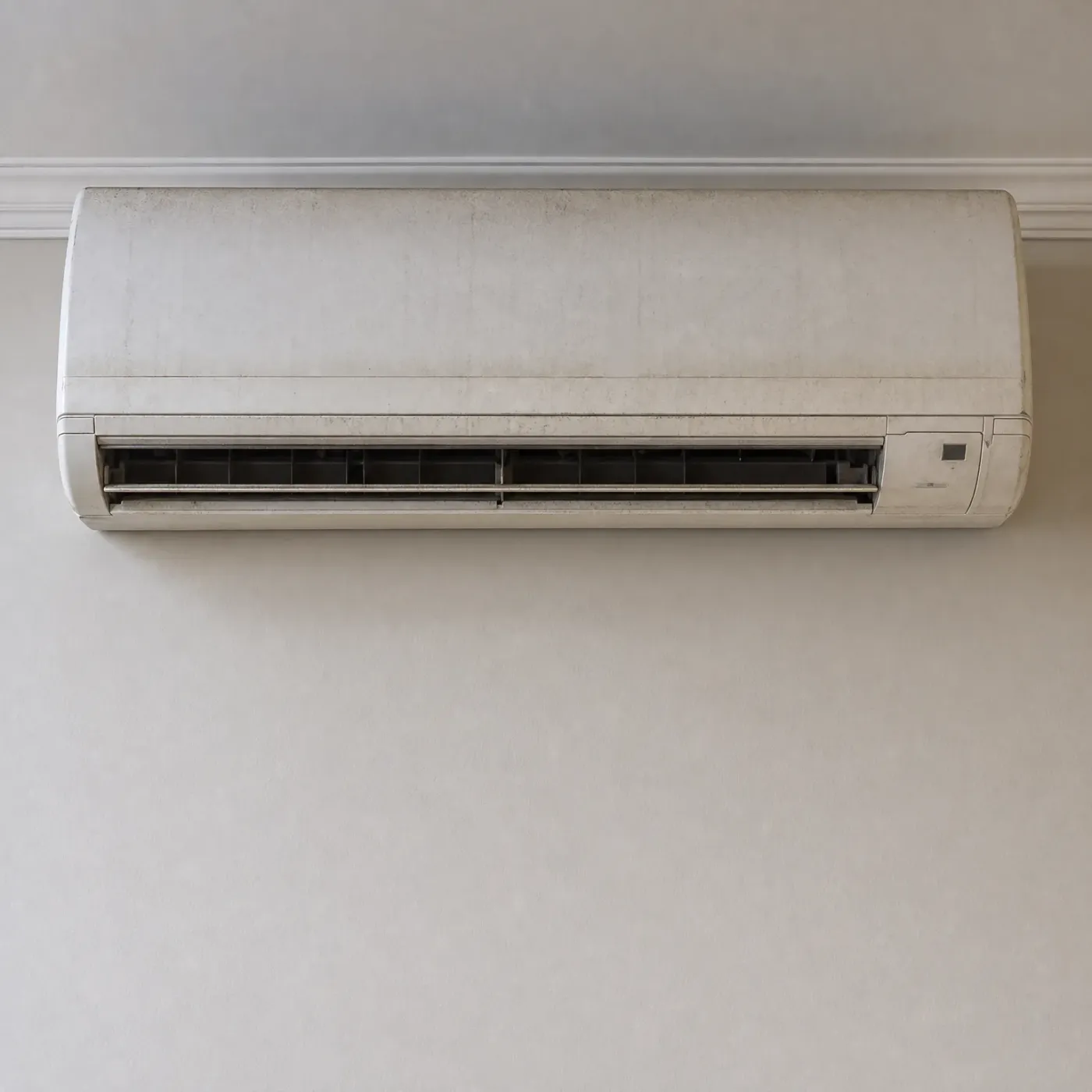
Running dirty
Skip a few seasons and you get this: dirt and mold along the vents and down the lower casing. That buildup blocks airflow across the coil, so the unit works harder for less cooling. It's also what spreads a musty smell through the room every time the fan turns on.
Skip the Tune-Up or Keep It Up
Tune-up skipped
Dust and mold film keep building on the indoor coil, so the head works harder to push the same amount of cold air into the room.
A clogged filter makes the unit run longer to hit the temperature you set, and in Wisconsin that shows up on a power bill that's already high.
Condensate drains go unchecked, and a blocked one can back up and drip water out of the indoor unit onto your wall or floor.
The outdoor unit sits through a Wisconsin winter with whatever debris collected on the coil over summer, nothing cleared until someone looks at it.
Small issues, a weak connection, a sensor reading off, go unnoticed until the system stops cooling on a hot day instead of showing up as a minor note.
Tune-up done
A contractor pulls the filters and cleans the indoor coil, so the head isn't fighting a layer of buildup to move air.
The condensate drain gets cleared, which matters in a Wisconsin summer when the unit runs long hours and moves a lot of moisture out of the air.
The outdoor unit's coil and fan get checked and cleaned, so it can reject heat the way it's supposed to instead of running longer for the same cooling.
Refrigerant levels and electrical connections get checked, catching a loose wire or a reading that's drifting before it becomes a no-cool call in July.
A local contractor who works on mini splits every season knows which parts tend to fail first and checks those spots specifically.
A mini split that's gone a few summers without a look gets harder to diagnose on your own. You can see a dirty filter, but you can't see a low refrigerant charge or a drain line that's starting to clog, and by the time it quits on a July afternoon you're choosing between a repair bill and a few sticky days waiting on a part. Wisconsin's humidity doesn't give a struggling head much room to coast. A contractor who services these units all season, not just when one breaks, knows which models in this area tend to clog their drain lines first and which ones lose charge slowly over a few years. That's the kind of thing you only pick up from doing the work repeatedly, not from a single visit. Getting matched with one local contractor instead of fielding calls from several means whoever shows up already has a sense of what to check first, instead of starting from scratch on a system they've never seen before.
Mini splits don't have ductwork to leak or clog, so the tune-up centers on the parts that do the work directly in the room: the filter, the coil, and the drain line.
That's why a contractor who services mini splits every season can usually tell you what's wrong before they open the unit. They've seen the same drain line clog and the same coil buildup in house after house.
Before you get your mini split maintenanceAfter you get your mini split maintenance
What you'd notice first
A mini split that needs service usually tells you through the room, not the unit. The air coming off the head feels weaker than it used to, or it runs longer to get the room to the temperature you set. Some people notice a musty smell when it first kicks on, from moisture sitting on the coil. None of that means the unit is failing. It means the filter and coil are overdue for a cleaning, and that's exactly what a tune-up addresses.
What it costs you to skip
A dirty filter or coil makes the unit run longer to move the same amount of cold air, and with power costing what it does in Wisconsin, that shows up on your bill before it shows up as a breakdown. Left long enough, a clogged drain line can back up and leak into the wall or ceiling below the indoor head. That's a repair bill a tune-up is built to prevent, not just a comfort issue you can live with for another summer.
Power costs 18.08 cents per kilowatt-hour statewide
At 18.08 cents a kilowatt-hour, every extra hour your mini split runs to make up for a dirty filter or weak coil shows up on your bill fast. Clean filters and a clear coil cut the amount of time the head has to run to cool the room, which keeps that rate from working against you.
EIA-861 2025 statewide residential average
A mini split tune-up is the filter, the coil, the drain line, and the outdoor unit, checked and cleaned so the head isn't working harder than it has to. That's the whole visit. Skip it and the signs show up as weaker air, longer run times, and a higher bill once summer sets in. A contractor who services mini splits all season in Wisconsin has seen which of these fail first and knows what to check before the unit lets you down on a hot afternoon. When you request a match here, you're connected with one licensed local contractor rather than a handful of companies competing for the job, someone who already knows this equipment because it's what they work on all year. From there, you know where things stand and what's next.