Tell us about the job
Takes about a minute. No obligation.
Before a contractor can quote a mini-split repair in Barron County, they have to sort out what actually drove the failure. 92 severe weather events were recorded in Barron County, Wisconsin between 2015 and 2024. At that rate, severe weather is a standing condition for outdoor units here, and the compressor, fan motor, and control boards carry that load season after season. A unit that stops cooling or loses efficiency may have given out under that pressure, or it may have a refrigerant charge problem that would have surfaced anywhere. The contractor's first job is to tell those two apart, because one points to a mechanical component and the other points to the refrigerant circuit, and the repair scope follows from that finding.
Housing built for a Wisconsin winter puts real demands on any heating and cooling system running inside it. Half the homes in Barron County, Wisconsin were built in 1977 or earlier (2020-2024 ACS 5-year). A mini-split that has been working against that climate for years arrives at a repair call with worn seals, stressed electrical connections, and refrigerant lines that have cycled through extreme temperature swings season after season. What a contractor finds once the unit is open reflects that history directly: whether the compressor is still within spec, whether the board shows heat or moisture damage, whether the parts the system takes are still in production. Those are the questions that decide what a repair costs and how long the fix holds.
The Parts of a Mini-split a Contractor Checks First
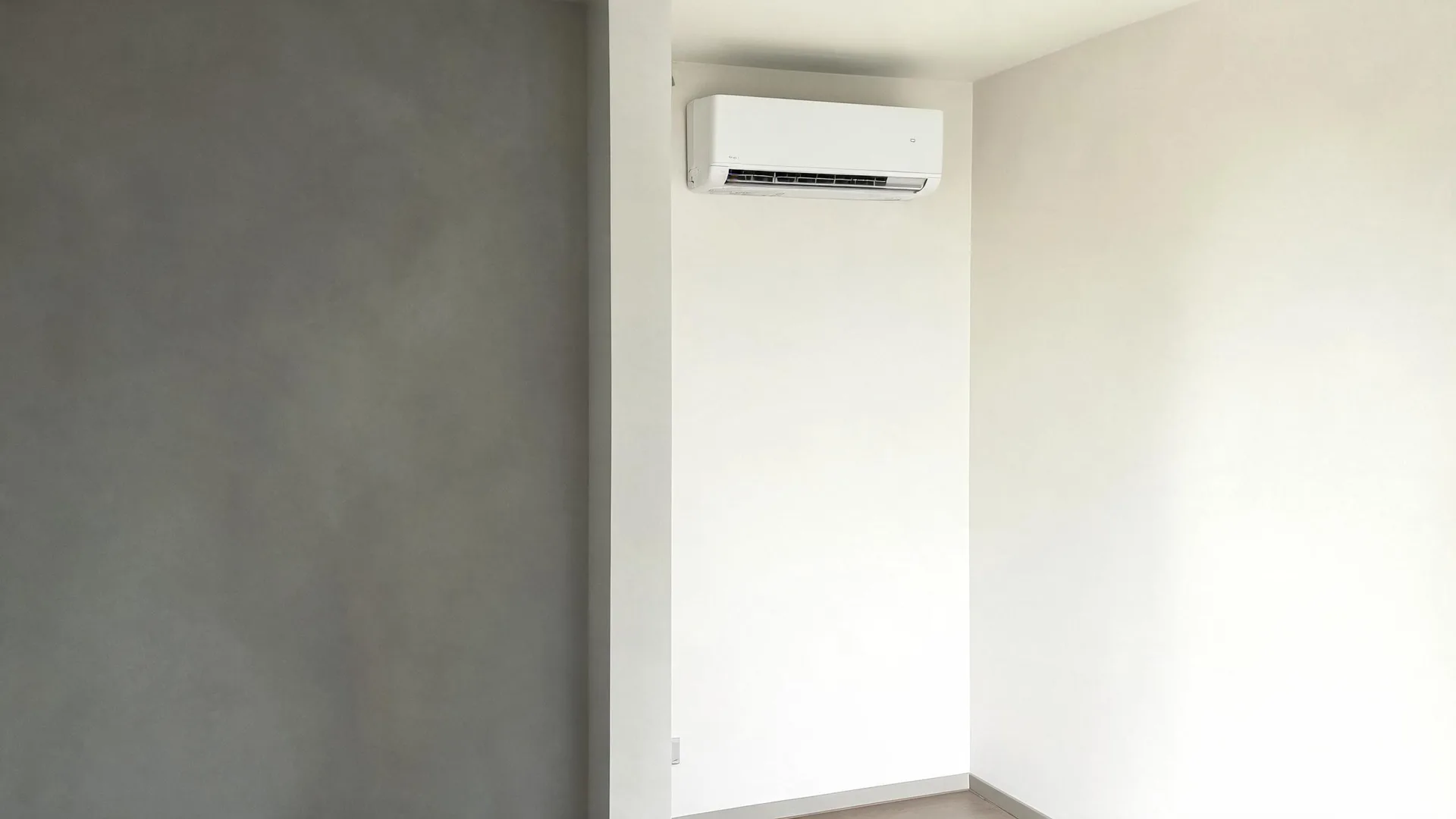
The indoor air handler mounts high on a wall inside the room and is the piece a homeowner sees every day. Its blower, coil, and filter are all working parts, and when airflow drops, temperatures swing, or the unit leaks water, a contractor starts here. The fan motor, the evaporator coil, and the condensate drain are the first things on the list.
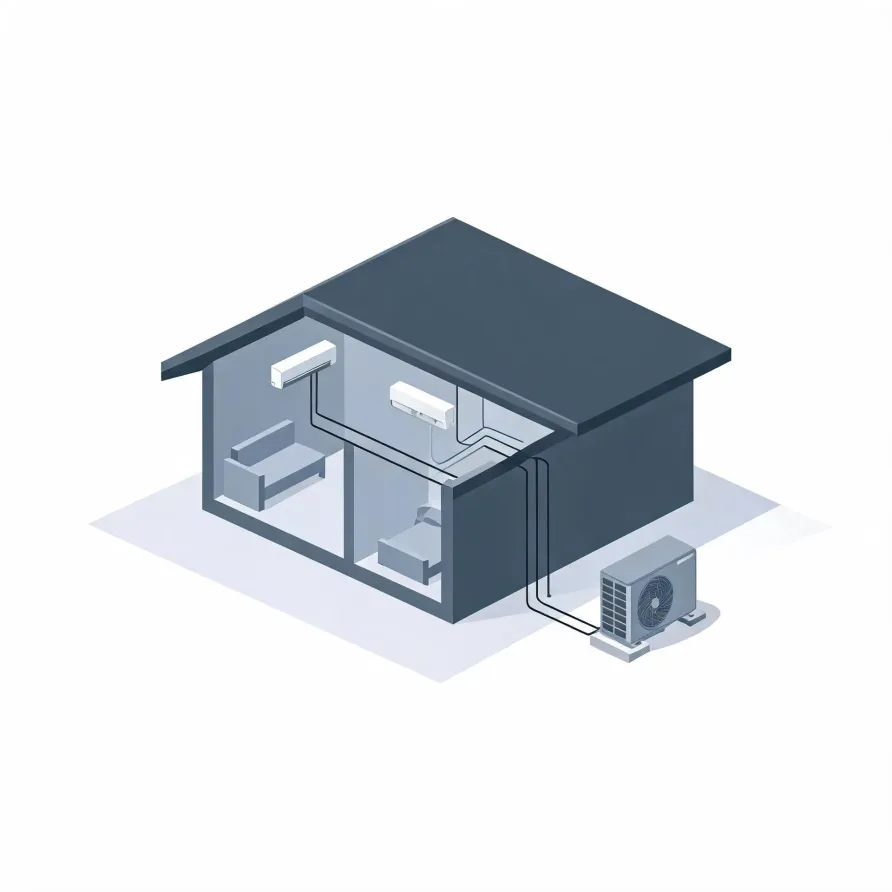
Outside, the condenser unit holds the compressor and the refrigerant controls that drive the whole system. The refrigerant line set runs between the two units through a small penetration in the wall, carrying the charge that makes everything work. A fault in the compressor or a refrigerant leak in that line shows up as a system that runs but fails to condition the room.
The drawing beside this text shows the general layout of a mini-split system, and a licensed contractor determines which components apply to your specific home and situation.
Get matched in Barron CountyBarron County by the Numbers
92 severe weather events were recorded in Barron County, Wisconsin between 2015 and 2024.
NOAA National Centers for Environmental Information, Storm Events Database, bulk CSV export, events 2015-01-01 through 2024-12-31.Half the homes in Barron County, Wisconsin were built in 1977 or earlier (2020-2024 ACS 5-year).
U.S. Census Bureau, 2020-2024 American Community Survey 5-Year EstimatesBarron County, Wisconsin holds 24,067 housing units (2020-2024 ACS 5-year).
U.S. Census Bureau, 2020-2024 American Community Survey 5-Year EstimatesOwners occupy 77.4% of the occupied homes in Barron County, Wisconsin (2020-2024 ACS 5-year).
U.S. Census Bureau, 2020-2024 American Community Survey 5-Year EstimatesRules & Standards Behind Mini-Split Repair in Barron County, Wisconsin2 sourced rules & standards
Licensing and Legal Requirements in Barron County, Wisconsin
A Wisconsin business that employs a certified HVAC qualifier is a certified HVAC business, and no city or county may require it to hold a local certification or licence on top of that.
Wisconsin requires a state HVAC contractor registration: no person or business may install or service heating, ventilating or air conditioning equipment, or offer to, without one.
Severe Weather Events in Barron County, Year by Year
Barron County's weather puts real stress on heating and cooling equipment, and that stress shows up as repair calls. A mini-split working hard against what the local climate delivers is one that deserves close attention.
92 severe weather events, 2015–2024. Source: NOAA National Centers for Environmental Information, Storm Events Database.