




Adding a mini split to a Wisconsin home with a furnace

Step 1 of 3: Equipment

A mini split works alongside your furnace instead of replacing it. Most homes here heat with gas, and the furnace can stay as the backup for the coldest stretches of winter while the mini split takes over the room or rooms it serves. Where it earns its keep is summer. Wisconsin summers get sticky, and a mini split cools and pulls humidity out of a space your furnace was never built to handle, since a furnace only moves heat, not moisture. The two systems run on separate thermostats and don't need to talk to each other. What you need is the install done right: the right size unit for the space, the line set and condensate drain run correctly, and the electrical sized for it. Get that wrong and you end up with a unit that short cycles, drips where it shouldn't, or never quite keeps up on the hottest days.

A man with grey hair and stubble in a dark sweater sits on a grey sofa indoors, looking off to the side, with a potted plant and a sunlit window behind him.
A man with gray hair, a beard and glasses, wearing a dark green sweater, sits on a gray sofa in a sunlit living room with a potted plant, table lamp and wooden sideboard behind him.
A middle-aged man with graying hair and a short beard sits on a blue sofa in a living room, looking toward a window, with a bookshelf, lamp and framed picture in the background.
A man with graying curly hair and a dark green sweater sits on a gray sofa in a sunlit living room, looking off to the side, with a framed picture, shelving, an armchair and a window with sheer curtains behind him.

Why does the upstairs still feel sticky in July?

Your furnace moves air through ducts built for heating, and a lot of Wisconsin homes never had cooling added to that system, or got a window unit that can't keep up once the humidity sets in. You notice it most in the room furthest from any vent, or upstairs where heat collects. The air feels heavy even when the thermostat says it's cool enough. A mini split puts a head directly in that room, so the air it moves is the air it just cooled, not air that traveled through ductwork built for January, not July. Skip it and you're running a window unit all summer, or just living with the one room that never cools down right.

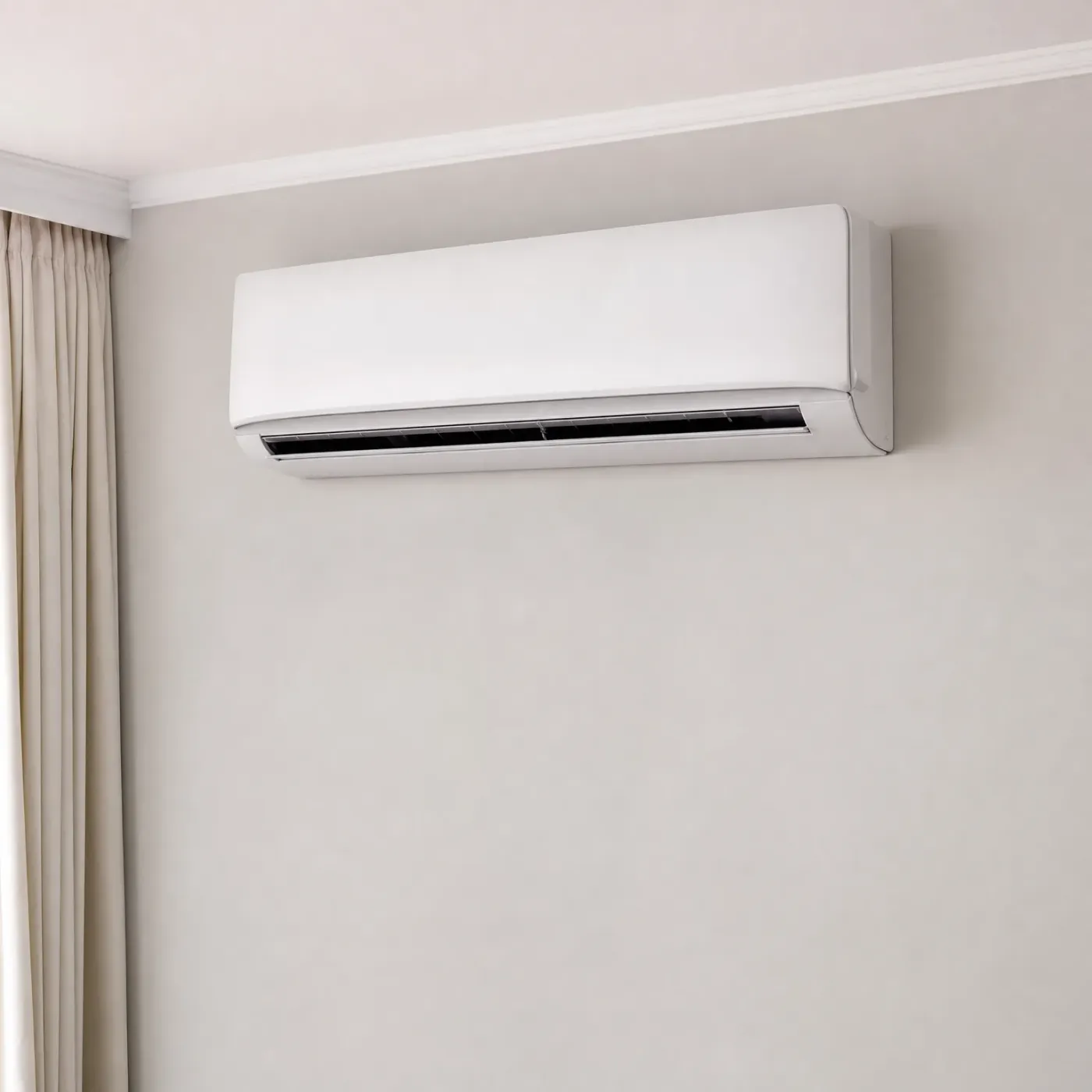
A white wall-mounted mini-split air conditioner near the ceiling of a room with light gray walls, white crown molding, and a beige curtain at the left edge.

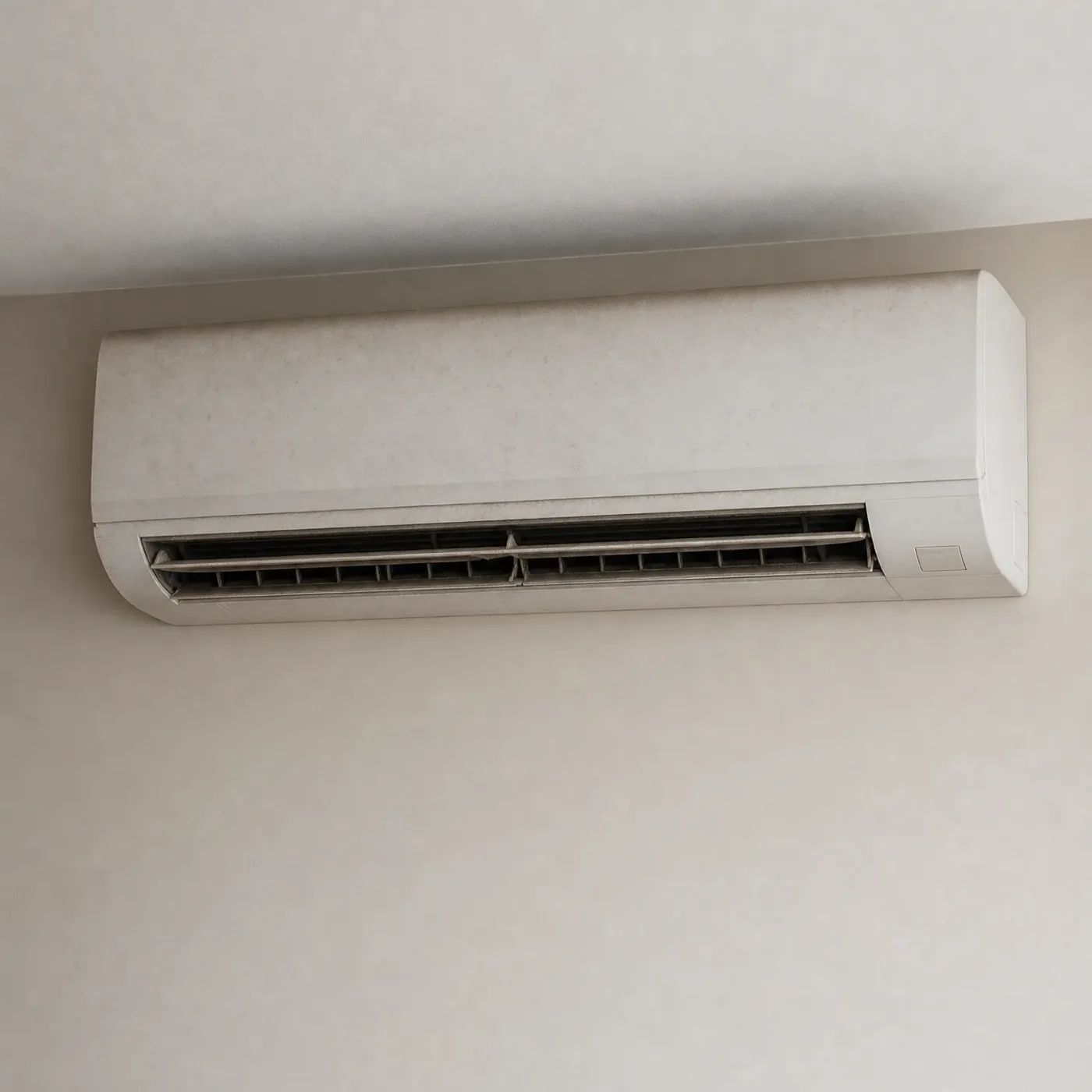
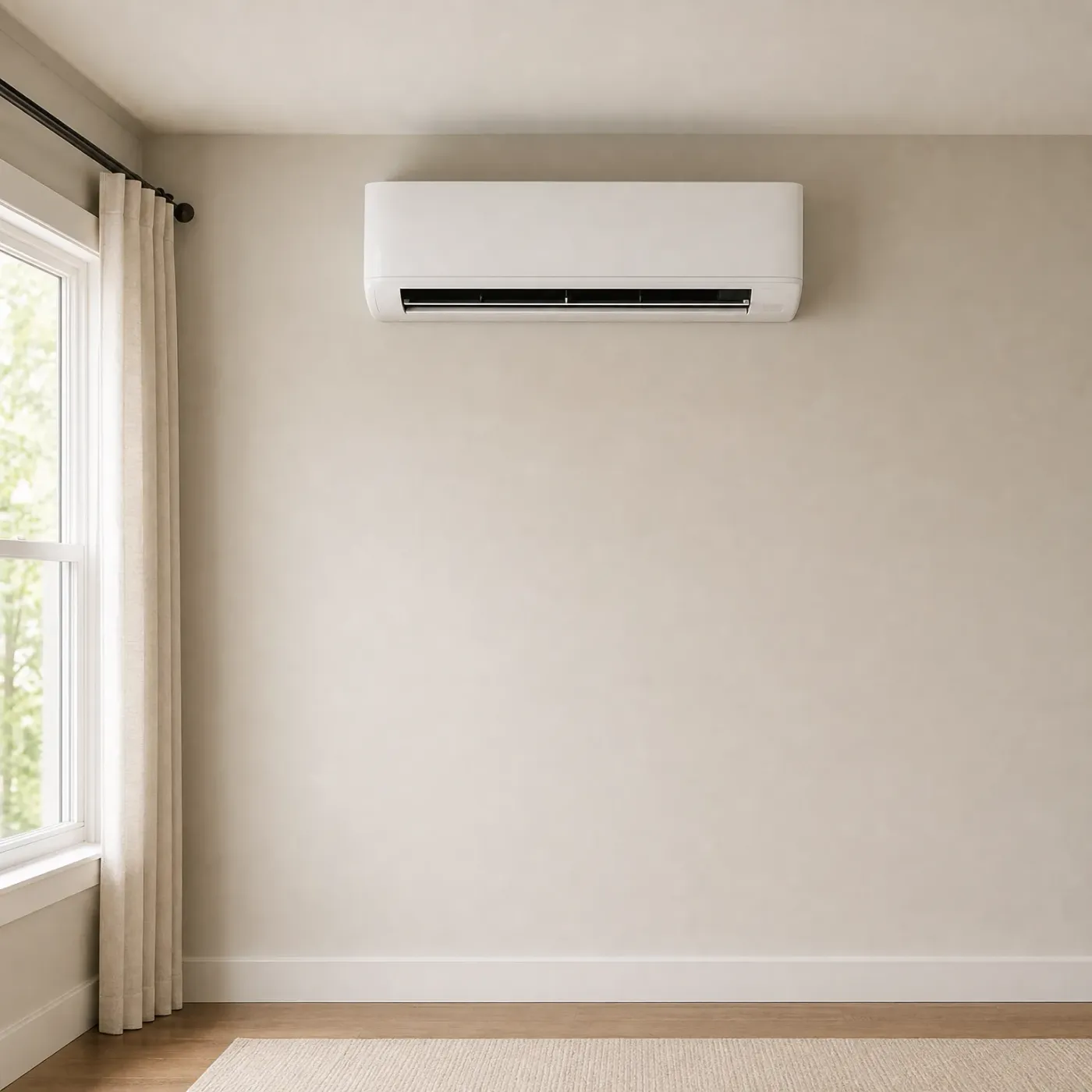
Installed right, it keeps running right

A mini split that's sized and set up correctly for the room it serves just works. The line set is sealed, the drain runs where it should, and the unit stays clean because nothing's leaking or backing up behind it.
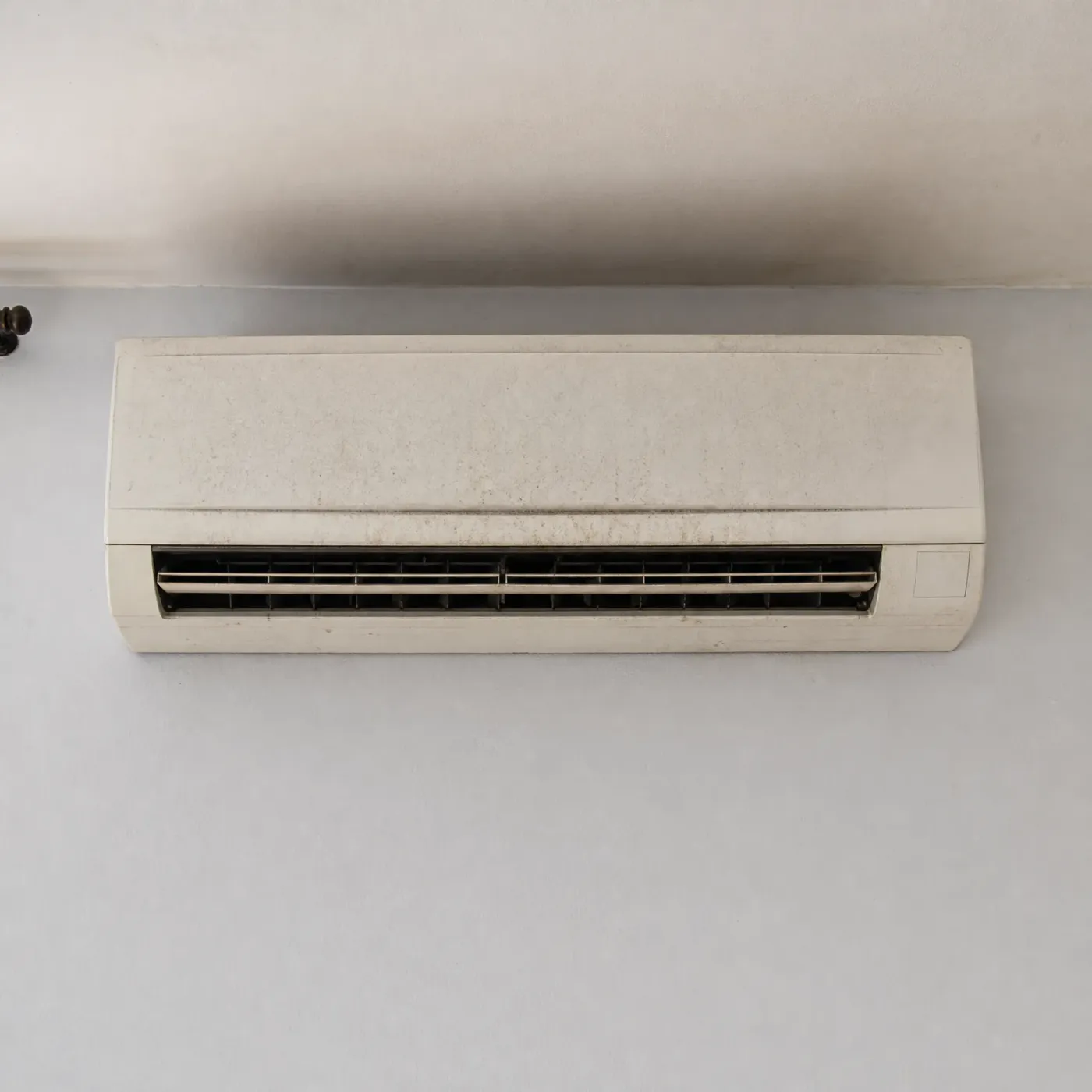
A dusty beige wall-mounted mini-split air conditioner indoor unit installed high on a plain light-colored wall below the ceiling.

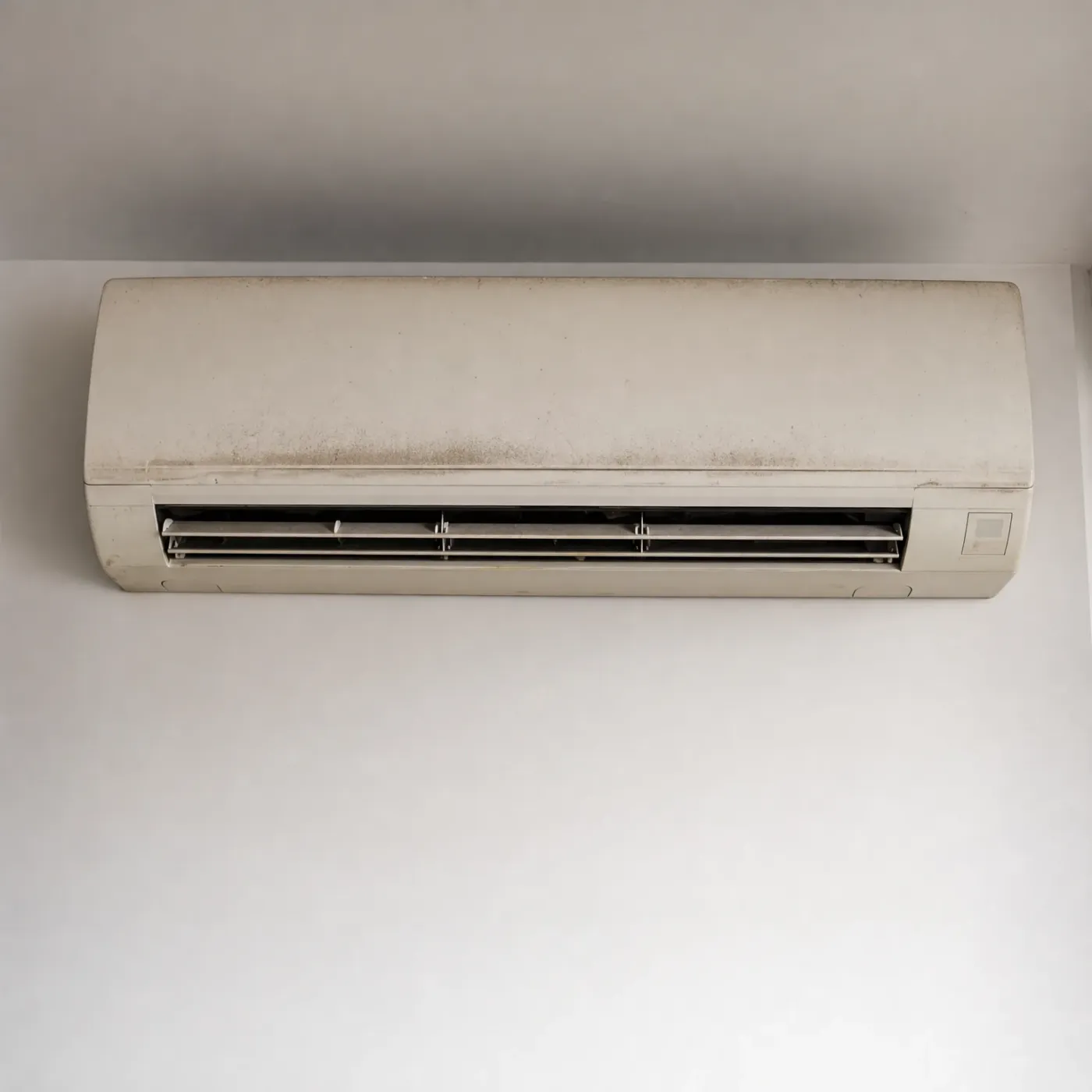
Installed wrong, this is what shows up

Dust and grime like this usually mean the filter isn't being reached or the unit was never sealed properly. That staining on the wall is condensation finding a way out where it shouldn't, often from a drain line that was never pitched right at install.

Does the mini split run off the furnace's ductwork?

You're picturing how a mini split would tie into the house and wondering if it shares the same ducts your furnace uses. It seems like it should, since both are heating and cooling the same rooms. But a mini split works nothing like your furnace, and that difference is exactly why it gets installed where ducts can't reach.

No, it runs on its own line set, not your ductwork

A mini split has no connection to your furnace's ducts at all. It moves refrigerant through a line set, a pair of copper lines run from the outdoor unit to the indoor head mounted on the wall or ceiling. That indoor head has its own fan and blows conditioned air straight into the room. This is what lets it cool a bonus room, a converted attic, or an addition that never got ductwork in the first place. Your furnace keeps heating the rooms it was built for, through the ducts it's always used, and the mini split handles its own space on a separate system entirely. Nothing about adding one touches the furnace's ductwork or how it runs.

A white wall-mounted mini-split air conditioner on a beige interior wall, with a curtained window on the left and wood flooring with a light rug below.

Set up correctly

A mini split installed right sits clean on the wall, quietly covering the room it's sized for. The line set is sealed tight, the drain runs where it should, and the refrigerant charge matches what the unit calls for. You run it all summer and never think about it.

A white wall-mounted mini-split air conditioner indoor unit installed near the ceiling on a plain light-colored wall, with its horizontal outlet vent and louvers visible.

Set up wrong

Dust and a yellowish film build up on the casing when a unit wasn't set up right. It's a sign of a slow leak, a drain that backs up, or a charge that was never checked against the line length. The unit keeps running, but it's working harder than it should to cool the room.

A dusty, discolored wall-mounted mini-split air conditioner indoor unit on a plain white wall, with its horizontal louvers and vent grille visible.
Before you get your mini split installation
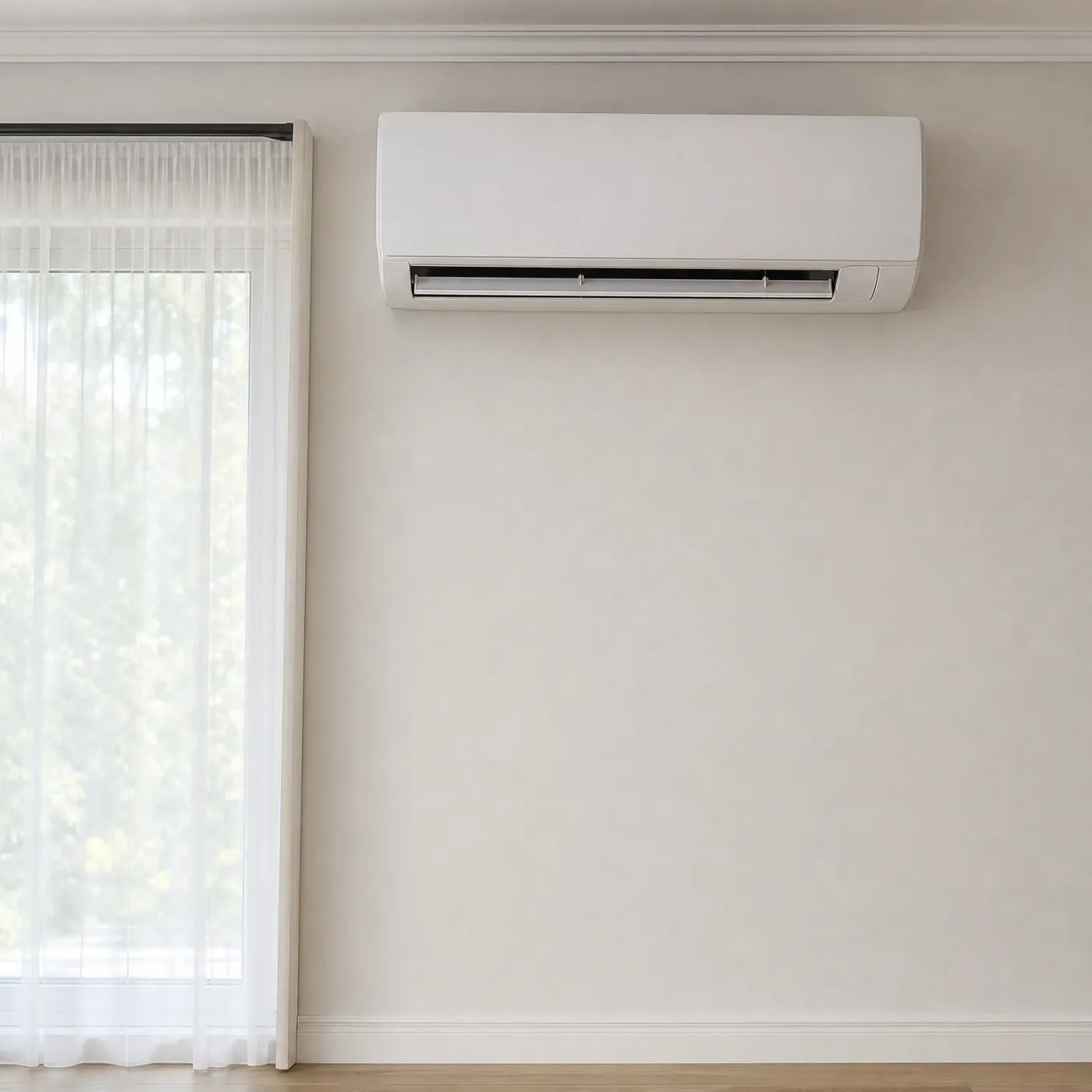
A white wall-mounted mini-split air conditioner on a beige interior wall, next to a window with sheer white curtains and green foliage outside.
After you get your mini split installation

One request and it's handed off

Getting a mini split installed alongside your furnace isn't a simple swap. Someone has to run the line set through the wall, set the condenser outside where it won't ice up or get buried in snow, and dial in a refrigerant charge that matches the room it's cooling. Get any of that wrong and you've got a unit that short cycles, drips where it shouldn't, or can't keep up once August gets sticky. That's work for someone who installs these every season here, not just furnaces, and knows how a Wisconsin winter and summer both treat the line set and the outdoor unit over time. One request goes to one local contractor who does this kind of install regularly, not a handful of companies competing for your callback. Send it, and the job of finding the right person for this stops being something you have to sort out yourself.

What a mini split adds to your bill

A mini split cooling one or two rooms draws a lot less than running a window unit flat out or asking a furnace blower to push air through ducts it wasn't sized for. With power costing what it does in Wisconsin, that difference shows up on the bill every month you run it, not just in July and August. It also works as a heat source down to a certain outdoor temperature, so on milder days in fall and spring it can carry the room without the furnace kicking on at all.

How it adds cooling without new ducts

Every mini split needs is a hole through the wall for the line set and a spot outside for the condenser. No ductwork gets cut into or rerouted, which matters since most Wisconsin furnaces were ducted for heat, not for cooling the whole house evenly. The indoor unit mounts high on the wall and covers the room it's in directly, so the air it moves doesn't have to travel through a duct system built for a different job. That's the whole reason it fixes what the furnace can't.

A woman with shoulder-length brown hair wearing a beige knit cardigan sits in a gray upholstered armchair near a window, looking off to the side with a slight smile, with bookshelves blurred in the background.
A woman and a sleeping child wrapped together in a cream knitted blanket on a couch, with a potted plant, framed photo and lit lamp in the background.

Power costs 18.08 cents per kilowatt-hour statewide

At that rate, every kilowatt your mini split doesn't pull matters. A unit sized right for the room cools it without making the compressor work harder than it has to, and that shows up smaller on your bill than a window unit or an overworked furnace blower would.

EIA-861 2025 statewide residential average

What this comes down to

  • A mini split added alongside your furnace handles the room it's sized for while your furnace keeps covering the rest of the house.
  • Getting the line set, drain, and refrigerant charge right the first time is what keeps the unit quiet and leak free for years.
  • A local contractor who installs these every season in Wisconsin knows where the condenser needs to sit so it doesn't ice up or sit buried after a storm.
  • Sending the form connects you with one licensed contractor matched to this job, not a handful of companies competing for the work.
  • Once that match is made, finding someone qualified is off your plate.

A mini split and a furnace can share a house without stepping on each other. The furnace keeps doing what it already does well, heating the whole place through the coldest months. The mini split takes on the room that's never been comfortable, the one that bakes in July no matter what the thermostat says, and cools it directly instead of asking ductwork to do a job it wasn't built for. That's the whole answer. What decides whether it stays the right answer five years from now is the install itself. The line set has to be run and sealed properly, the condenser has to sit somewhere it won't ice over or disappear under a snowbank, and the refrigerant charge has to match the unit and the room, not just whatever the box says. Get that wrong and you've got a unit that runs loud, leaks, or never quite cools the way it should. Get it right and you mostly forget it's there, which is the point. This is why it matters who does the work. Someone who installs mini splits in Wisconsin homes all year, through the humidity and through the snow load, has already seen what fails when it's rushed and knows how to place and charge the unit so it doesn't. Sending the form puts you in touch with one contractor like that, local to you, licensed for the work, and focused on this job rather than juggling it against other leads. From there, the part that's usually the hardest, finding someone you can trust to do it properly, is handled.

Kitchen corner with cream upper cabinets, oak lower cabinets, white marble-look countertop, beige tile backsplash, a ceramic vase of greenery, a wooden cutting board and bowl, and a black-framed window at right.
Interior corner of a room with a white-framed window and wide sill, beige walls with panel molding, a wooden cabinet holding a ceramic vase with a green leafy plant, and blurred shrubs and trees outside.
A wood-framed armchair with beige cushions and a woven lumbar pillow sits in a corner beside a large window overlooking green trees, with a tall ceramic vase holding leafy branches on the left and plaster walls and wood flooring.
Interior corner with a white-framed window above a sill, beige walls with baseboard molding, a greige shaker-style cabinet with brass knobs and a potted plant on top, light wood flooring and a woven jute rug.
A dark-framed six-pane window with white trim and sill set in gray horizontal lap siding, with hydrangea shrubs below and a white column and shingled roof section at left.

Done looking for a mini split pro

Only one pro gets your request, so you hear from one company.

I'm done searching

No fee to send it, and nothing to sign.